
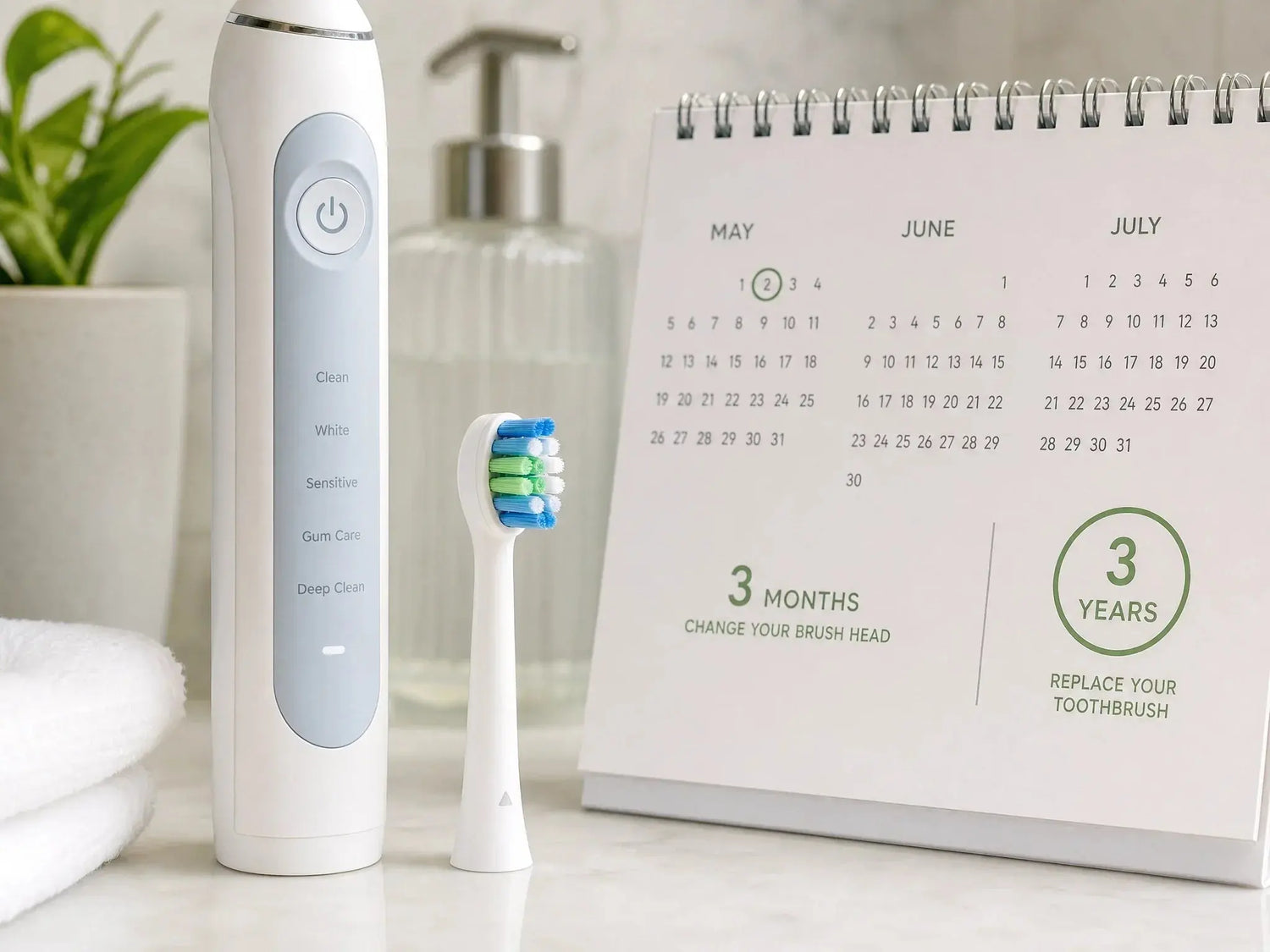
TL;DR: The handle of an electric toothbrush typically lasts 3 to 5 years, while the brush head should be replaced every 3 months. These two parts wear out very differently — treat them separately.

What Is the Typical Lifespan of an Electric Toothbrush Handle?
The average lifespan range for an electric toothbrush handle is 3 to 5 years with normal use. That’s not a guarantee — it’s the window where the battery and motor stay reliable. Once performance starts slipping, you’re usually past the prime.
This timeline lines up with what most manufacturers build for. As noted in one comprehensive lifespan overview, handles are designed as rechargeable electronics, not disposable gadgets, so their life is dictated by battery aging and internal wear.
Average Handle Lifespan by Brand
| Brand | Model Series | Battery Type | Typical Years of Use |
|---|---|---|---|
| Oral‑B | iO, Genius, Pro | Li‑ion | 3–5 |
| Philips Sonicare | DiamondClean, ProtectiveClean | Li‑ion | 3–5 |
| Quip | Metal/Plastic | Alkaline (replaceable) | 2–3 (motor) / unlimited with battery swaps |
| Budget / No‑Name | Various | NiMH | 2–3 |
Models with lithium‑ion batteries like the Oral‑B iO or Philips Sonicare DiamondClean tend to hold their runtime better over years compared to older NiMH designs, which degrade faster from the memory effect and heat stress.
How Battery Health Determines the Life of the Handle
Battery degradation is the top reason handles fail. Every rechargeable cell loses capacity as you cycle through charges. After 2 to 5 years, you’ll notice you have to charge much more often. A full charge that used to last 2 weeks might only give you a few days. Once the runtime drops below what’s convenient, the handle is effectively at the end of its useful life.
How Long Do Electric Toothbrush Heads Last?
The brush head replacement interval is completely separate from the handle. No matter how new your handle is, the tiny bristles on the head wear out quickly. The universal recommendation is to replace the head every 3 months.
The 3‑Month Rule: What Dentists Recommend
“The American Dental Association (ADA) recommends that you replace your toothbrush approximately every three to four months, or sooner if the bristles are frayed.” — Oral‑B guidance, citing ADA standards
Electric brush heads have shorter bristles than manual brushes, so they splay and soften even faster. Manufacturers like Philips Sonicare build in reminder features: the blue indicator bristles fade to white when it’s time to swap. That visual cue makes it effortless to know exactly when to act.
Telltale Signs Your Brush Head Is Worn Out
Don’t wait for a calendar notification. Look for these signs weekly:
- Frayed or splayed bristles that fan outward instead of pointing straight up.
- Faded indicator bristles (if your head has them) — color fading past the halfway mark.
- A rougher feel on gums or teeth, or a “less clean” sensation after brushing.
- Visible discolouration or smell that doesn’t rinse away.
Why You Must Replace Brush Heads Every 3 Months
A worn brush head isn’t just less effective — it can actually harm your mouth. Here’s what happens when you push past 3 months.
Plaque Removal and Gum Health Risks
Clinical data confirms that a fresh brush head removes significantly more plaque. One Oral‑B resource states: “clinical research shows that a new toothbrush can remove more plaque than one that's worn out”. When bristles lose their stiffness, they can’t sweep away the sticky biofilm that builds up along gumlines. The result? Plaque buildup, increased risk of gingivitis, and even bleeding gums.
If you have sensitive gums or are prone to bleeding, you may want a brush that reduces irritation. That’s where the RANVOO AirJet X5 comes in. Instead of relying solely on mechanical scrubbing, it uses supercharged bubbles to penetrate deep between teeth for Level‑1 cleaning power, while its 22,000 strokes/min low frequency with 12° micro‑oscillation is designed specifically to protect sensitive gums. It’s a smarter way to clean without worrying about gum damage.
Bacteria and Hygiene Concerns
Over time, microorganisms accumulate in the tufts of an old brush head, especially in damp bathrooms. A 3‑month replacement cycle keeps this invisible load to a minimum. If you’ve been sick, swap the head immediately after recovery — don’t reuse the same head for weeks after a cold or flu.
When Should You Replace the Entire Electric Toothbrush?
Here’s a simple checklist. If you notice any of these signs it’s time to replace, retire the handle and buy a new one.
Battery No Longer Holding a Charge
If a full charge gives you less than half the original runtime — and you’ve already cleaned the contacts — the internal battery is done. Battery degradation cannot be reversed in sealed units.
Loss of Cleaning Power or Unusual Noise
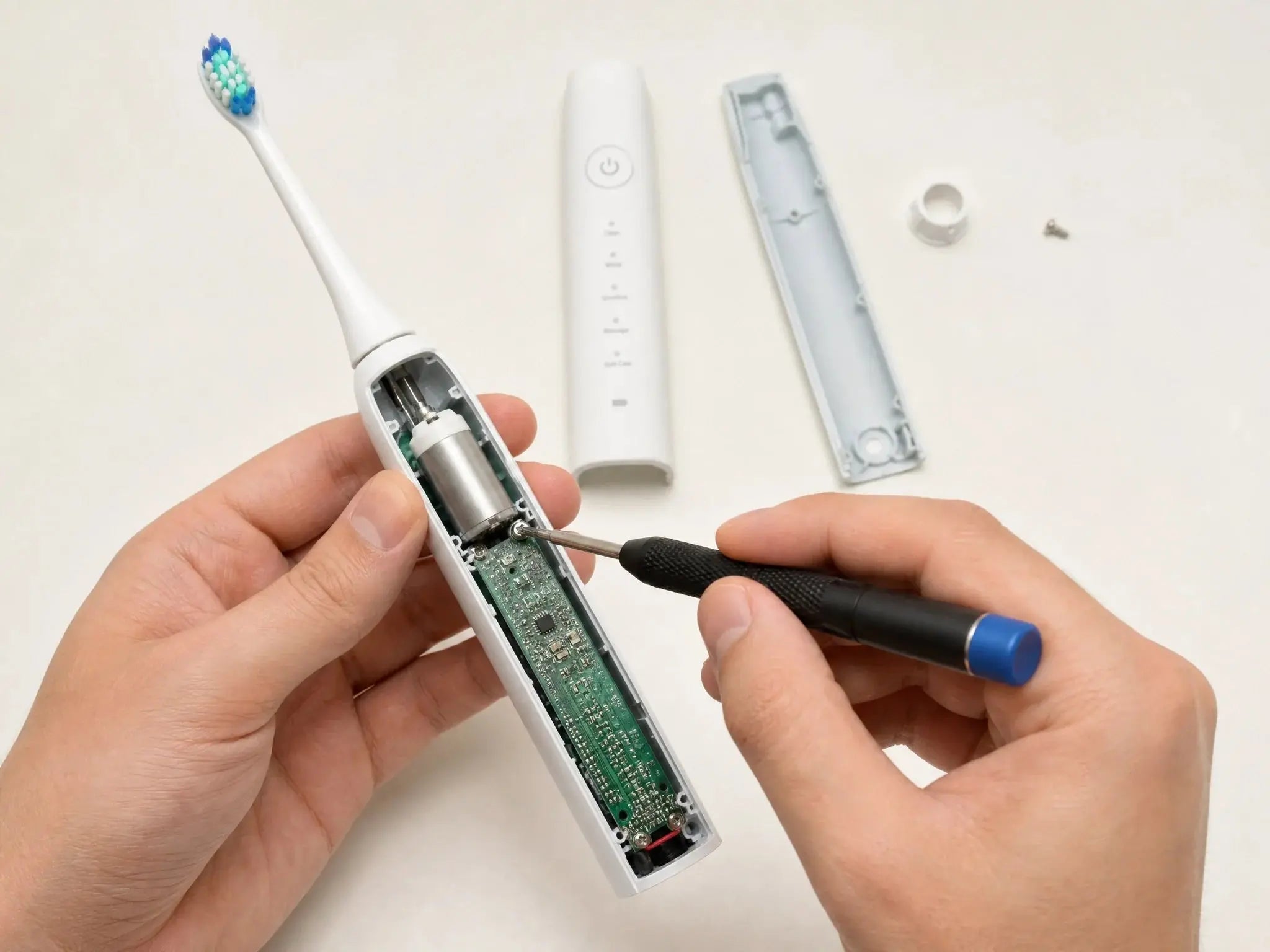
A weaker vibration, uneven humming, or rattling sound points to motor wear and tear or loose internal parts. When a brand‑new head doesn’t restore that crisp clean feeling, the motor is likely worn out.
Visible Cracks, Mould, or Seal Damage
Water damage / seal integrity is a silent handle killer. If you see cracks in the casing, mould around the power button, or a fogged display, moisture has entered. Stop using it immediately — water ingress can cause electric shock or irreparable corrosion. This is far more common on brushes left lying in puddles on the counter.
Factors That Impact How Long Your Electric Toothbrush Lasts
Your daily habits and the environment make a huge difference.
- Brand, build quality, and water resistance: Premium models often carry an IPX7 rating (fully submersible, sealed internals), while budget models may only be splash‑resistant. Better seals keep moisture away from the motor and circuit board longer.
- Charging and storage habits: Leaving a brush constantly on the charger (especially NiMH models) can accelerate battery wear. Storing it in a damp, closed space like a drawer or a medicine cabinet without ventilation encourages mould. Always store the brush upright in a dry, open area.
- Frequency and pressure of use: Brushing more than twice a day or sharing a handle between multiple users puts extra strain on the motor. Heavy-handed brushing also wears out heads faster — the bristles splay within a month instead of three.
How to Make Your Electric Toothbrush Last Longer
Proper maintenance can easily stretch a handle past the 5‑year mark. Follow these steps.
Daily and Weekly Cleaning Routines
- Rinse the brush head thoroughly after every use and shake off excess water.
- Wipe the handle with a damp cloth at least once a week to remove toothpaste residue. Never submerge the handle fully.
- Clean the charger base with a dry cloth to avoid gunk buildup around the contacts.
Smart Charging Practices for Battery Longevity
- For lithium‑ion brushes, avoid keeping them on the charger 24/7. Charge when the battery light indicates low, and unplug once full.
- If you have an older NiMH brush, run a full discharge cycle every month or two to reduce the memory effect.
Safe Storage to Avoid Damage
- Use a ventilated holder that keeps the toothbrush upright and separate from other brushes.
- When traveling, always use a protective case that allows airflow — never seal a wet brush head in an airtight bag.
For a worry‑free storage solution, consider the RANVOO AirJet X5. It comes with a magnetic wall‑mounted holder that not only keeps the brush upright and ventilated but also holds the head securely without pooling water. The handle itself carries Level‑0 anti‑mold certification, meaning the material resists microbial growth even in humid bathrooms — so you never have to deal with moldy brushes or compromised seals.
Where to Buy Replacement Heads and When to Upgrade
Finding Genuine Replacement Heads
Buy from authorized retailers, the brand’s official website, or subscription services that ship heads every 3 months. Counterfeit heads often lack proper bristle quality and can damage the handle’s drive shaft. Stick to the same brand and model line for a secure fit.

Signs It’s Time to Upgrade to a New Model
If your handle still works but is missing modern features, an upgrade might be worthwhile. Newer models come with pressure sensors to prevent gum damage, app connectivity that tracks brushing habits, Bluetooth feedback, and 2‑week battery life. If your current brush predates these, moving to a new handle can genuinely improve your daily clean.
Electric Toothbrush vs. Manual Toothbrush: Longevity and Long‑Term Value
| Electric Toothbrush (Handle + Heads) | Manual Toothbrush | |
|---|---|---|
| Upfront cost | $30–$180 | $2–$5 |
| Replacement frequency | Handle: 3–5 years; Heads: every 3 months | Every 3 months |
| 3‑year cost estimate | $60–$250 (including heads) | $24–$60 |
| Plaque removal efficacy | Clinically superior — rotating/vibrating bristles disrupt more plaque | Dependent entirely on technique |
| Long‑term hygiene | Consistent pressure and timing; built‑in timers, sensors | No feedback; easier to miss spots |
Over a 3–5 year span, electric brushes may cost more upfront, but the cleaning advantage is clear. And because handles last years, you’re not constantly throwing away plastic — just a small head every 3 months.
Bottom line: Replace the brush head every 3 months, treat the handle with care, and you’ll get a solid 3–5 years of powerful, reliable cleaning. When the battery or motor fades, it’s time for a new handle — not before.


Leave a comment
This site is protected by hCaptcha and the hCaptcha Privacy Policy and Terms of Service apply.