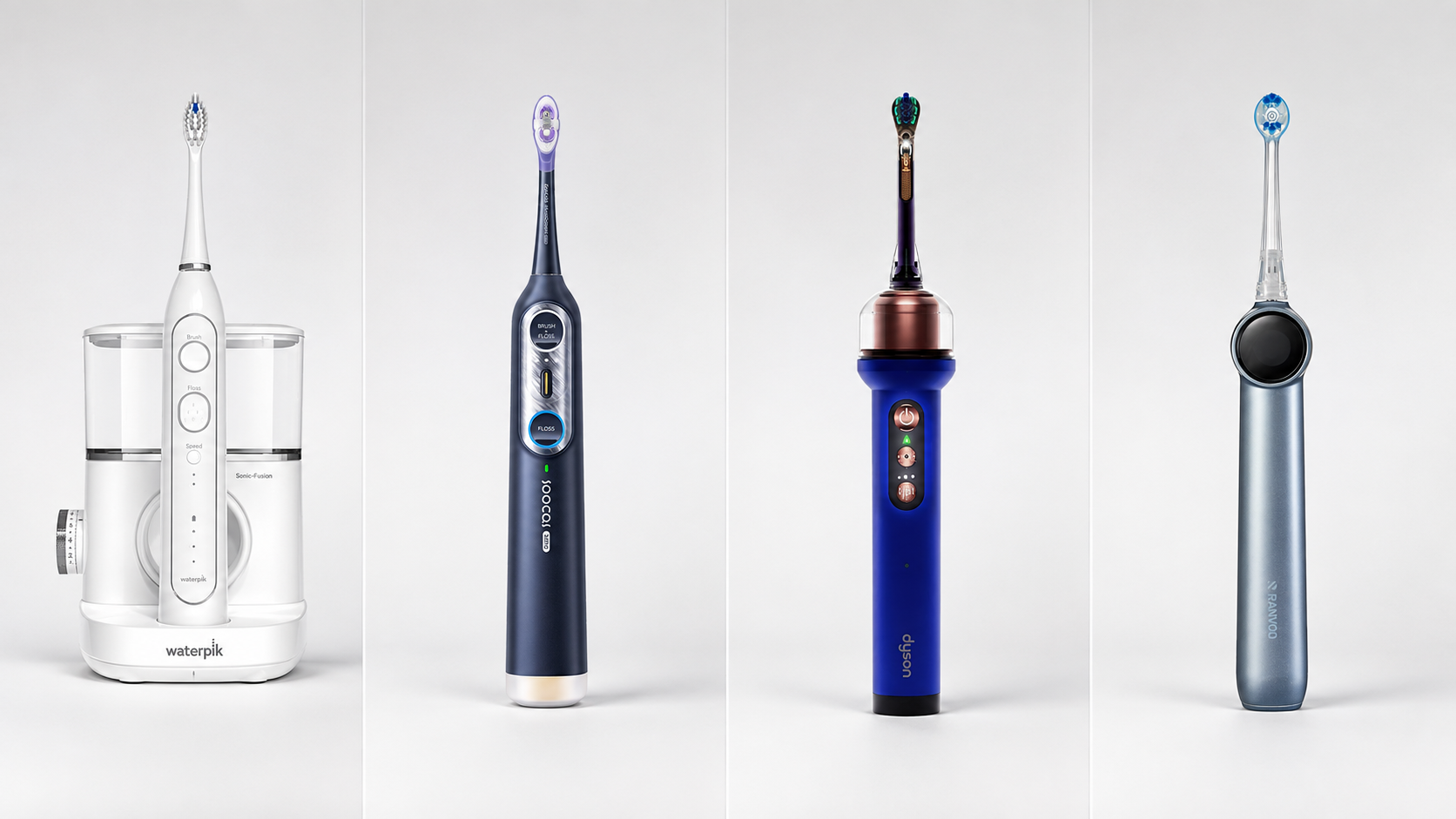
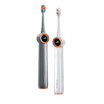
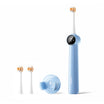

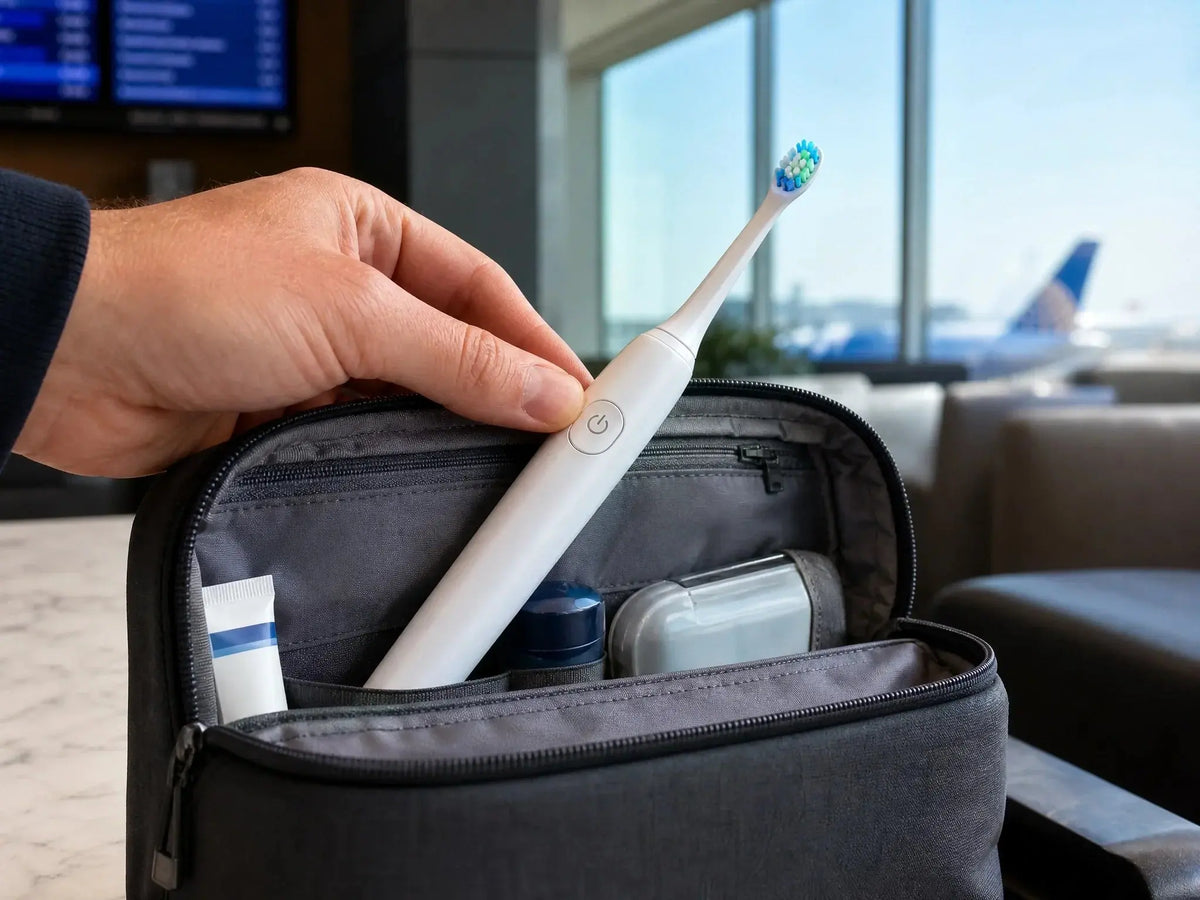
The short answer: Yes. You can bring an electric toothbrush on a plane, according to the TSA’s electronic toothbrush guidance.
Electric toothbrush rules at a glance
| What you are packing | Carry-on bag | Checked bag | What to do |
|---|---|---|---|
| Rechargeable toothbrush with an installed lithium battery | Yes — recommended | Usually yes | Switch it fully off and protect the power button if checked (TSA; FAA) |
| Toothbrush with alkaline or NiMH AA/AAA batteries installed | Yes | Yes | Protect the device from damage and accidental activation (FAA dry-battery guidance) |
| Spare alkaline or NiMH AA/AAA batteries | Yes | Yes | Keep terminals away from metal objects (FAA dry-battery guidance) |
| Spare lithium AA/AAA or removable lithium battery | Yes | No | Protect each battery from short circuits (FAA lithium-battery guidance) |
| Toothbrush charger with no battery inside | Yes | Yes | Pack normally |
| Power bank used to charge the toothbrush | Yes, subject to limits | No | Keep it accessible and check your airline’s rules (FAA; IATA 2026 guidance) |
Best choice for most travelers: Put the toothbrush in your carry-on toiletry bag. It is easier to protect, less likely to be lost, and accessible if a battery problem occurs.
What TSA and FAA rules say
The TSA lists electronic toothbrushes as permitted in both carry-on and checked baggage. Battery safety requirements come mainly from the FAA’s rules for portable electronic devices and the U.S. Department of Transportation.
For a rechargeable toothbrush with a lithium battery installed:
- Carry-on baggage is preferred.
- Checked baggage is generally allowed.
- In a checked bag, the toothbrush must be completely switched off—not left in sleep or standby mode.
- It must be protected from damage and accidental activation.
- A damaged, swollen, overheating, or recalled battery-powered toothbrush should not be taken aboard.
The FAA’s standard limit for a consumer lithium-ion battery is 100 Wh; batteries from 101–160 Wh require airline approval. A normal electric toothbrush is unlikely to approach those limits, but check the label, manual, or manufacturer’s website if its capacity is unclear.
Important: Security officers and airlines can apply additional screening or stricter conditions. Check your airline before departure, especially on an international itinerary.
The rule people most often get wrong: spare batteries
“Spare” means a battery that is not installed in a device.
Spare lithium batteries cannot go in checked baggage. Pack them in your carry-on and prevent the terminals from touching metal. You can:
- Leave each battery in its original retail packaging.
- Cover exposed terminals with non-metallic tape.
- Use an individual battery case or protective pouch.
- Place batteries separately so they cannot rub against coins, keys, or one another.
Ordinary non-lithium dry cells—such as alkaline or NiMH AA and AAA batteries—are allowed in carry-on and checked bags under U.S. rules. They should still be protected from damage and short circuits.
Gate-check reminder: If airline staff take your carry-on at the gate, move spare lithium batteries and any power bank into your personal item. For international travel, moving the toothbrush itself into your personal item is also the simplest way to follow the IATA’s 2026 passenger guidance.
What changed in 2026?
There is no new TSA ban on electric toothbrushes in 2026: the TSA continues to list the item as permitted. The basic rule remains the same—an installed battery is treated differently from a loose spare battery.
The main 2026 update concerns power banks, not toothbrushes. The IATA’s revised 2026 passenger guidance says:
- No more than two lithium-ion power banks, each no larger than 100 Wh.
- Do not recharge a power bank from the aircraft’s power supply.
- Do not store a power bank in an overhead bin.
- Do not use a power bank to charge another device during taxi, takeoff, or landing.
These are international industry guidelines, and individual airlines may be stricter. They matter only if you bring a separate power bank or a charging case that functions as one; IATA classifies a battery installed in a device separately from a power bank.
2026 takeaway: Your toothbrush is still allowed. The item most likely to face a new restriction is the separate power bank in your bag.
How to pack an electric toothbrush
You do not need an elaborate setup. A few simple steps are enough:
- Dry the toothbrush. Wipe moisture from the handle and brush head.
- Switch it off. Use a travel lock if the model has one.
- Prevent accidental activation. Use a fitted travel case or position the handle so nothing presses the button. A small piece of low-tack tape can help if the button is exposed.
- Protect the brush head. Use a ventilated cap or a clean case. Avoid sealing a wet brush head for a long trip.
- Pack spare lithium batteries separately. Keep them in your carry-on with protected terminals.
Simple packing rule: Dry it, switch it off, protect the button, and keep loose lithium batteries out of checked luggage.
Do you need to remove it at airport security?
Usually, no. The TSA’s electronic toothbrush guidance does not list a standard requirement to remove it from your bag, although an officer may request additional screening. Follow the instructions at your checkpoint, because equipment and local procedures vary.
If the bag is selected for inspection, do not worry. A toothbrush motor or charging case may simply require a closer look.
What about toothpaste?
For U.S. carry-on baggage, toothpaste follows the TSA liquids rule:
- Each container must be 3.4 oz / 100 mL or smaller.
- Liquids, gels, creams, and pastes must fit in the permitted quart-size bag.
- Larger toothpaste tubes can go in checked baggage.
The limit is based on the container’s labeled capacity, not how much toothpaste remains inside.
International flights
The practical advice is similar in the United States and Europe: keep lithium-powered portable devices in hand baggage when possible, and never place spare lithium batteries in checked luggage, according to the FAA and EASA.
| Trip | Practical advice |
|---|---|
| U.S. domestic flight | Follow TSA screening rules and FAA battery rules |
| Flight departing the EU | Carry the toothbrush in hand baggage when possible; EASA says checked devices must be fully off and protected |
| Multi-airline or international itinerary | Follow the strictest airline rule on your route, as advised by IATA |
| Carry-on checked at the gate | Remove spare lithium batteries and power banks; keep the toothbrush with you if possible |
Always check the airline’s dangerous-goods page before flying. Both the FAA and IATA note that airline rules can be more restrictive than the general standard.
Water flossers, UV cases, and charging cases
Use the same battery logic for other oral-care devices:
- Rechargeable water flosser: Treat it like an electric toothbrush. Carry-on is preferred; empty the water tank before packing.
- UV sanitizer with its own installed battery: Treat it as a battery-powered device, not automatically as a spare battery.
- Charging case or battery case: If it can store energy and charge another device, an airline may treat it like a power bank. Keep it in your carry-on and check the airline’s policy.
- Cord-only charger: If it contains no battery, it can go in either bag.
Final checklist
Before leaving for the airport, check that:
- The toothbrush is fully switched off.
- The power button cannot be pressed accidentally.
- The handle and brush head are dry and protected.
- Spare lithium batteries are in your carry-on with covered terminals.
- Any power bank follows your airline’s current limits.
- Carry-on toothpaste containers are 3.4 oz / 100 mL or smaller.
- The toothbrush or battery is not damaged, swollen, overheating, or recalled.
Bottom line: Yes, you can fly with an electric toothbrush. Carry it on when possible. If you check it, switch it completely off and protect it. Keep every spare lithium battery—and every power bank—in the cabin.