









Oral Health

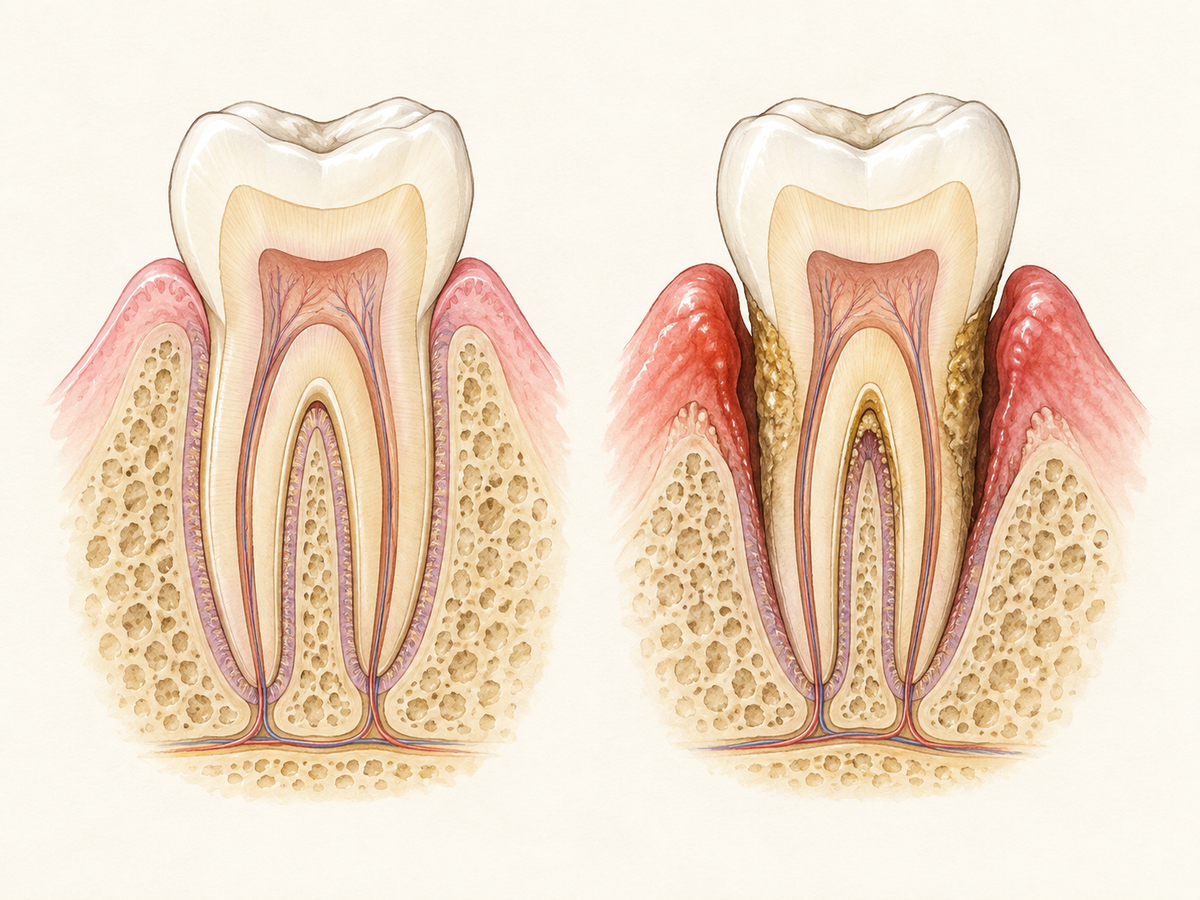
Cross-section comparing a healthy tooth with firm pink gums and intact jawbone to a tooth affected by periodontal disease, showing plaque and tartar at the gumline, a deepened gum pocket, inflamed tissue, and bone loss.
Oral Care

What Is Periodontal Disease?

This article explains how periodontal disease starts, how gingivitis differs from periodontitis, and how to prevent and treat gum disease.
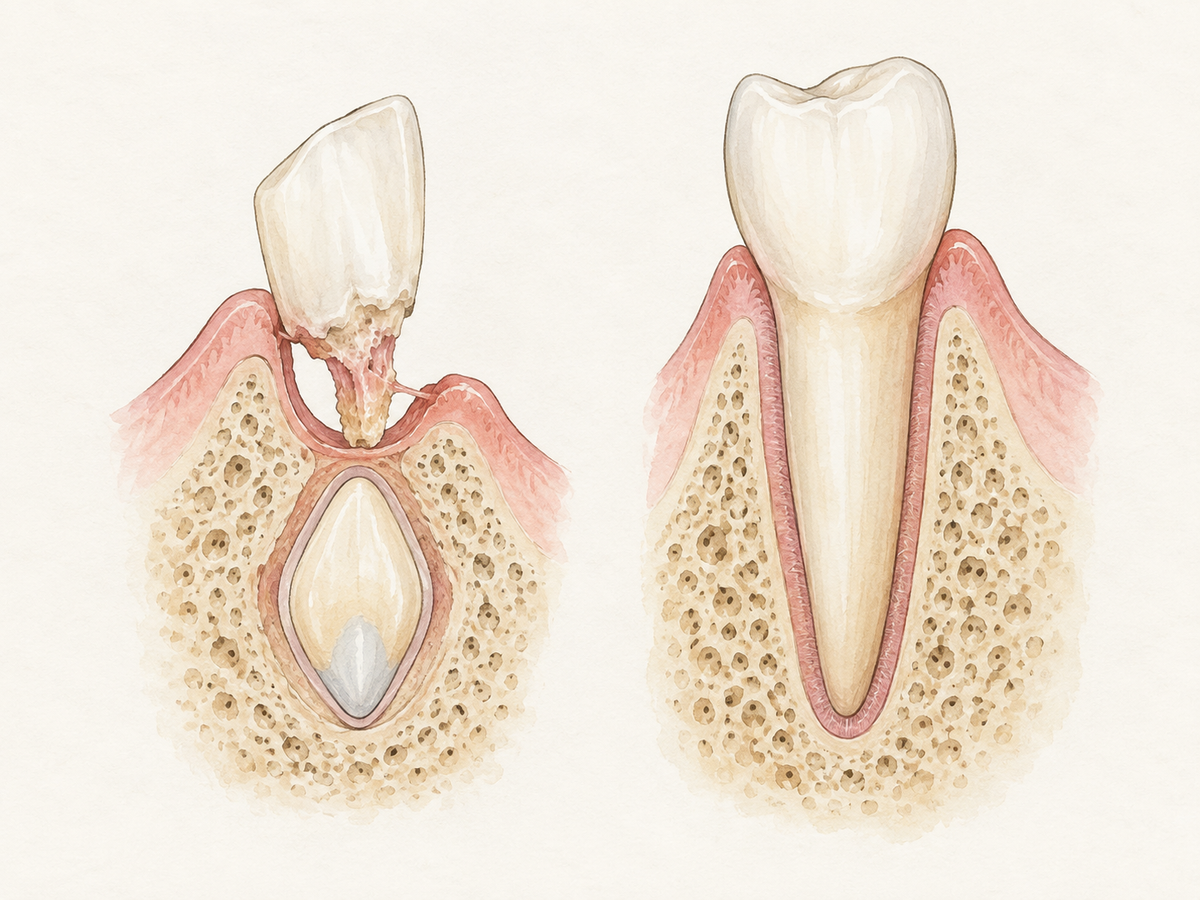
Oral CareCross-section comparison of a very loose baby tooth with a dissolved root and the permanent tooth beneath it, next to a firmly rooted adult tooth in healthy gum and bone, showing why only ready baby teeth are safe to pull.

When to Pull a Loose Tooth

A loose baby tooth is safe to pull at home only when very loose, pain-free, and easy to twist, but a loose adult tooth needs a dentist.

Oral CareA gloved hand holds a swab near the back of an open mouth and throat during an oral STI test, showing the tongue, tonsils, uvula, and pharynx where infections can be detected.

STIs and Related Conditions: What to Know

STIs often cause no symptoms, so testing, treatment, and prevention matter, including which tests to ask for and when to seek care.

Oral CareCross-section of a human tongue and oral lining shows intact pink tissue and delicate sensory nerves highlighted with a soft warm glow, representing the burning or tingling of burning mouth syndrome without any visible sore.

Medicines and Burning Mouth: Causes and Treatment Options

Some blood pressure drugs, antidepressants, and hormones may trigger burning mouth; this covers diagnosis, treatment options, and when to seek follow-up.

Oral CareA cross-section of two teeth and gum tissue shows dental plaque along the gumline and a strand of floss gently entering the sulcus; inflamed gum tissue contains fragile capillaries, explaining why gums may bleed when flossing.

Why Your Gums Bleed When Flossing

Gums bleeding when flossing usually means plaque buildup and inflamed gums, not harm from floss. Learn causes, when to see a dentist, and how to floss gently.
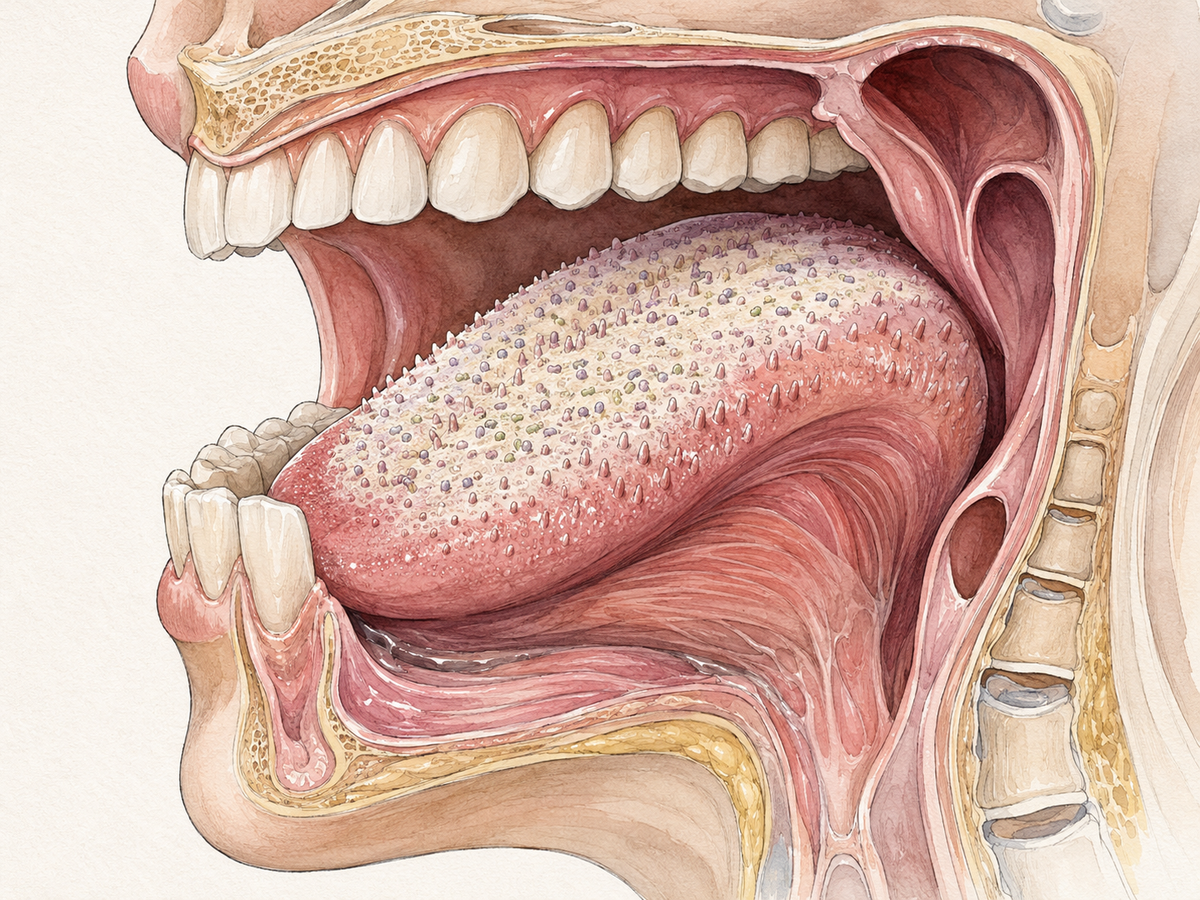
Oral CareCross-section of the mouth showing the top surface of the tongue covered by a pale bacterial coating among the papillae, with healthy ivory teeth and pink gums nearby, highlighting the tongue as the main source of bad breath.

Why You May Not Always Smell Your Own Bad Breath

You often can't smell your own bad breath due to olfactory adaptation. Learn reliable home checks, signs others notice, and when halitosis needs a dentist.
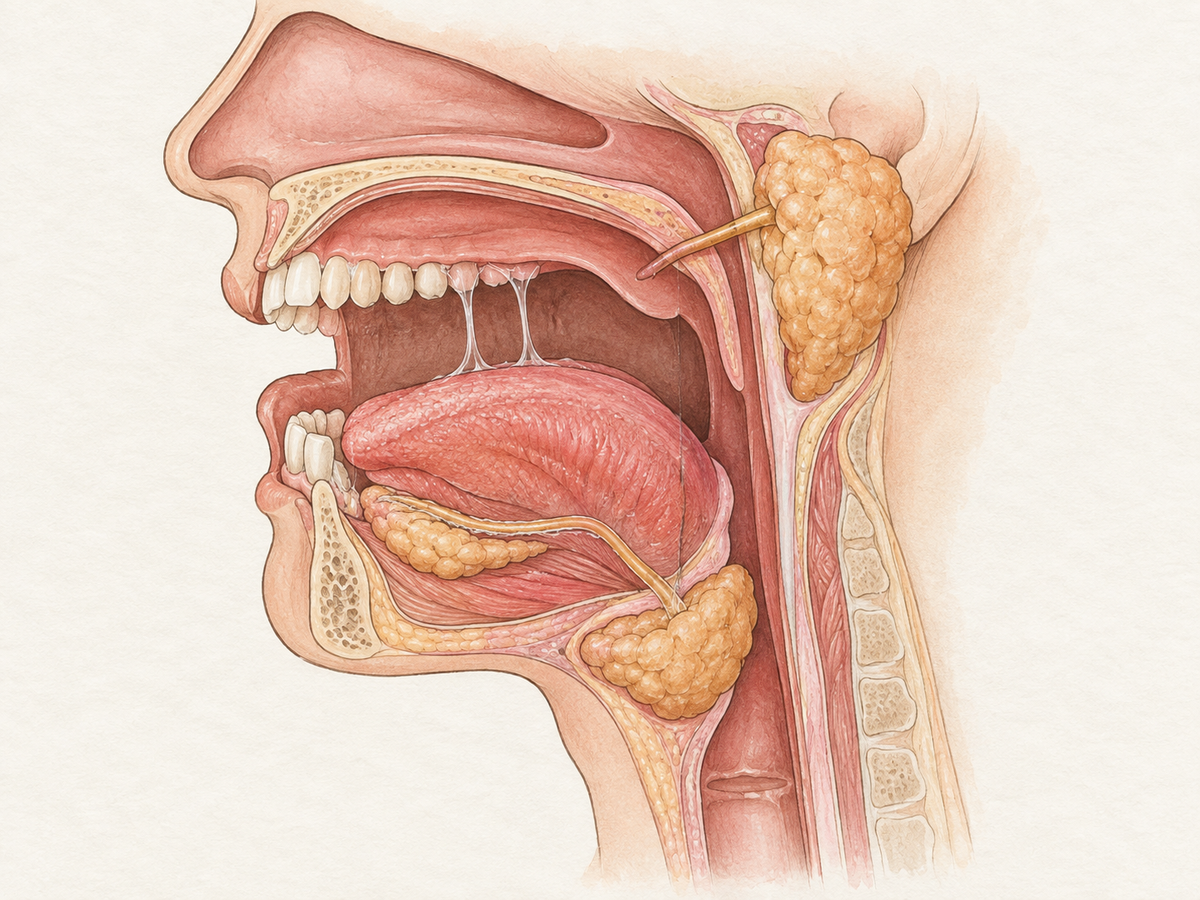
Oral CareCross-section of the mouth showing teeth, tongue, gums, and salivary glands, with thickened, stringy saliva bridging the tongue and palate to illustrate sticky saliva or dry mouth.

4 Causes of Sticky Saliva and How to Relieve It

Sticky saliva is often caused by dehydration, medications, mouth breathing, smoking, or dry air; find home remedies and when to see a dentist or doctor.