



No. A fully removed wisdom tooth cannot grow back. Adults do not grow a new set of molars after a tooth has been extracted. If you feel a hard bump, puffy spot, or pressure in the area, it is almost always healing tissue, a small bone fragment, a leftover root tip, or another normal change. A dentist can check and tell you which one is happening.
If you feel a hard bump after wisdom tooth removal, do not poke or pull at it. Keep the area clean and let a dentist examine it.
Why It Can Seem Like It Grew Back
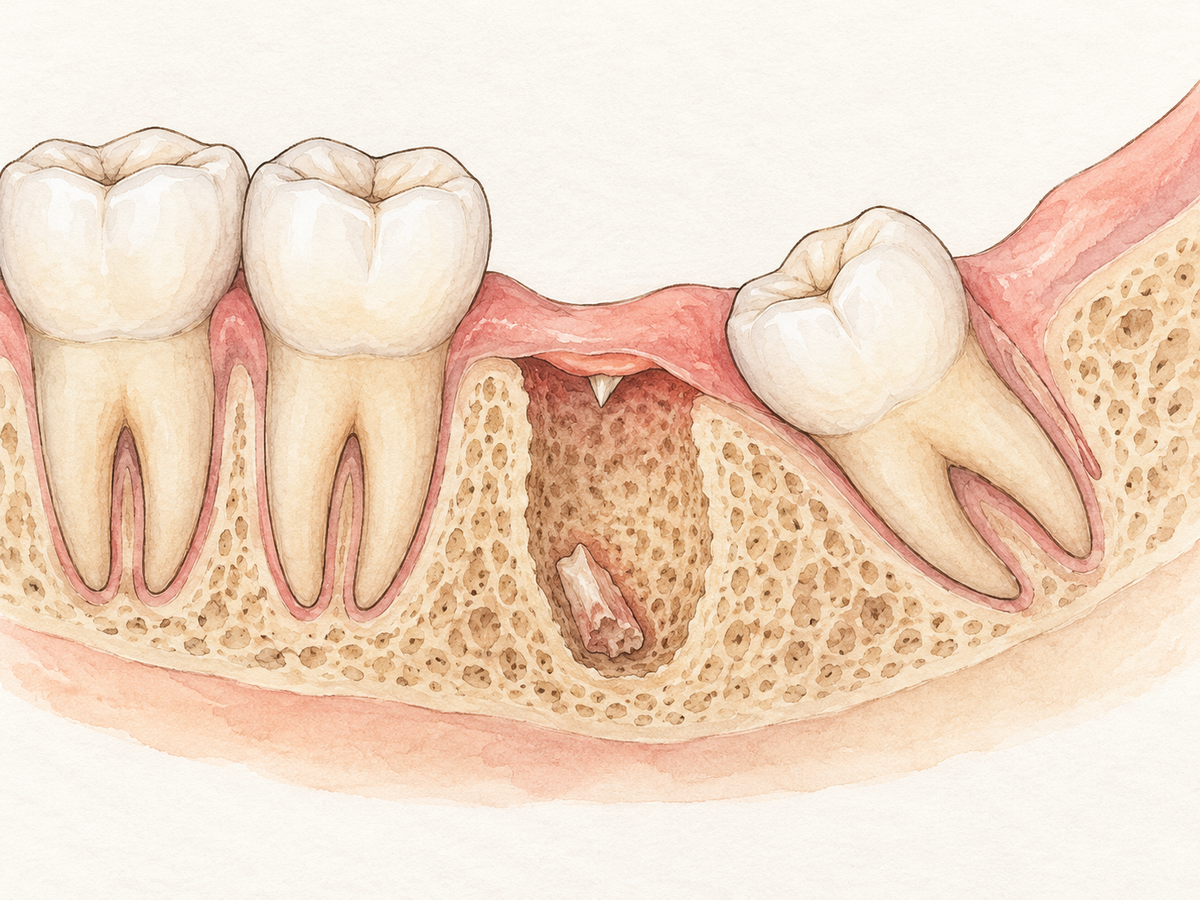
The tooth removal hole, also called the extraction socket, can create some odd sensations as it heals. New gum tissue fills the space, and the jawbone underneath goes through normal healing changes. That can make the area feel firm, lumpy, or tender.
Sometimes a tiny sharp piece of bone called a bone spicule works its way toward the surface. It can feel like a thin, hard splinter, and many people mistake it for a new tooth. In other cases, a neighboring molar shifts slightly into the open space, causing pressure that feels like a wisdom tooth pushing through.
Nerve and tissue changes can also create a phantom tooth sensation: a feeling that the removed tooth is still there. These feelings are common during healing. They do not mean the tooth grew back.
The Biology: Why Removal Is Permanent
A wisdom tooth is one of the third molars. Like other teeth, it forms early in life from a tooth germ, a tiny cluster of early tooth-forming cells. Around that developing tooth sits a soft covering called the tooth sac, or dental follicle.
When a dentist removes a wisdom tooth, the goal is to remove the whole tooth and clean out that soft sac from the socket. Expert guidance on third molar surgery recommends cleaning leftover tooth sac tissue from the socket after removal.
Adult humans do not form new tooth germs after a tooth is extracted. In other words, your body does not create another early tooth bud to replace the one that was removed. Because of this, true regrowth of a wisdom tooth is not biologically expected.
What’s Really Behind the Bump or Pain
Most post-removal bumps and aches come from one of the following:
- Leftover root piece: A small piece of the tooth root may remain, especially if the tooth fractured during removal or it was safer to leave a tiny fragment near a nerve. This is called a retained root fragment. A review of extraction complications found that these fragments can shift over time but usually do not cause long-term problems.
- Bone spicule: A small, sharp bone fragment can work itself out of the healing socket. It may feel like a hard sliver.
- Slow-healing gum tissue: Some people heal more slowly. The gum may stay tender, swollen, or puffy for a while.
- Socket infection: Pain, swelling, pus, a bad taste, or fever can point to an infection in the tooth hole. This is not a new tooth.
- Neighboring tooth shifting: A nearby molar can drift into the gap left by the removed wisdom tooth. That can create pressure.
- Soft tissue swelling: Swelling is soft and puffy. A hard tooth-like piece usually feels firm and sharp.
A quick way to think about it:
| What you notice | More likely explanation |
|---|---|
| Hard, sharp bump | Bone fragment or leftover root piece |
| Soft, puffy lump | Swollen gum or slow healing |
| Ache or pressure deep in the area | Healing socket or nearby molar shifting |
Only a dentist can tell these apart with an exam and an X-ray.
Extra Teeth: A Separate Finding
There is another rare explanation: some people simply develop extra teeth. Hyperdontia means having extra teeth. Those extra teeth are called supernumerary teeth.
Supernumerary teeth form from extra early tooth tissue during development. They are a developmental anomaly, meaning a difference in how the teeth were formed, not a sign that an extracted tooth grew back. A review of supernumerary teeth defines them as teeth or tooth-like structures that form from a tooth bud in excess of the usual number.
These extra teeth can appear near the wisdom tooth area. They may be discovered when the wisdom tooth is removed, or they may show up later on an X-ray. An extra tooth behind the wisdom tooth area is sometimes called a fourth molar. It is a separate tooth, not the original one returning.
When to Call a Dentist
Call your dentist if you notice any of these signs after wisdom tooth removal:
- Pain that gets worse after the first few days instead of better
- New or increasing swelling
- Pus or fluid coming from the area
- A bad taste in your mouth that does not clear up
- Fever or feeling generally unwell
- Numbness in your lip, chin, or tongue
- A visible hard piece that does not settle or keeps causing discomfort
Clinical guidance on dental infections describes pain, swelling, fever, and generally feeling unwell as common signs of an acute dental infection.
Do not wait if you feel very unwell or if swelling spreads quickly. A dental infection can become serious if it moves into the neck or eye area.
What Your Dentist Will Check and Do
The dentist will look at the area, gently probe the healing tissue, and ask about your symptoms. Then they will usually take an X-ray.
A panoramic X-ray shows both jaws in one view. If the dentist needs a more exact picture, especially for a small root tip or an extra tooth, they may recommend a 3D scan called a CBCT. This scan can show the exact position of a root fragment, bone piece, or extra tooth.
Depending on what they find, next steps may include:
- Watching a tiny fragment. Small pieces sometimes stay put and cause no symptoms.
- Removing a leftover root piece or extra tooth. If it is causing pain, infection, or crowding, removal is often a short in-office procedure done with local anesthesia.
- Treating an infection. This may involve cleaning the socket and, when needed, antibiotics.
- Smoothing a sharp bone edge. A dentist can smooth a small bone point that keeps irritating the gum.
Most of these second procedures are straightforward and have a short recovery.
What Not to Do While You Wait
While you wait for your appointment, the most important rule is simple:
- Do not poke, prod, or try to pull anything out of the healing socket. This can introduce bacteria and damage tender tissue.
- Keep the area clean according to your post-removal instructions.
- Use a cold compress on the outside of your cheek if swelling is bothering you.
- Do not try to diagnose yourself from internet photos. A bump can look alarming online, but only an exam and X-ray can tell what it actually is.
Most post-wisdom tooth bumps and aches are not a new tooth. They are part of healing or a small, treatable issue. If something feels off, a quick dental check is the fastest way to get an answer and feel better.
 Best Overall
 Best Value
 Best for Sensitive Teeth
This article has been reviewed by an oral health professional for accuracy. It is intended to provide general educational information and should not be used as a substitute for personalized medical advice, diagnosis, or treatment. If you have questions or concerns about your oral health, please consult a dentist, physician, or other qualified healthcare provider.