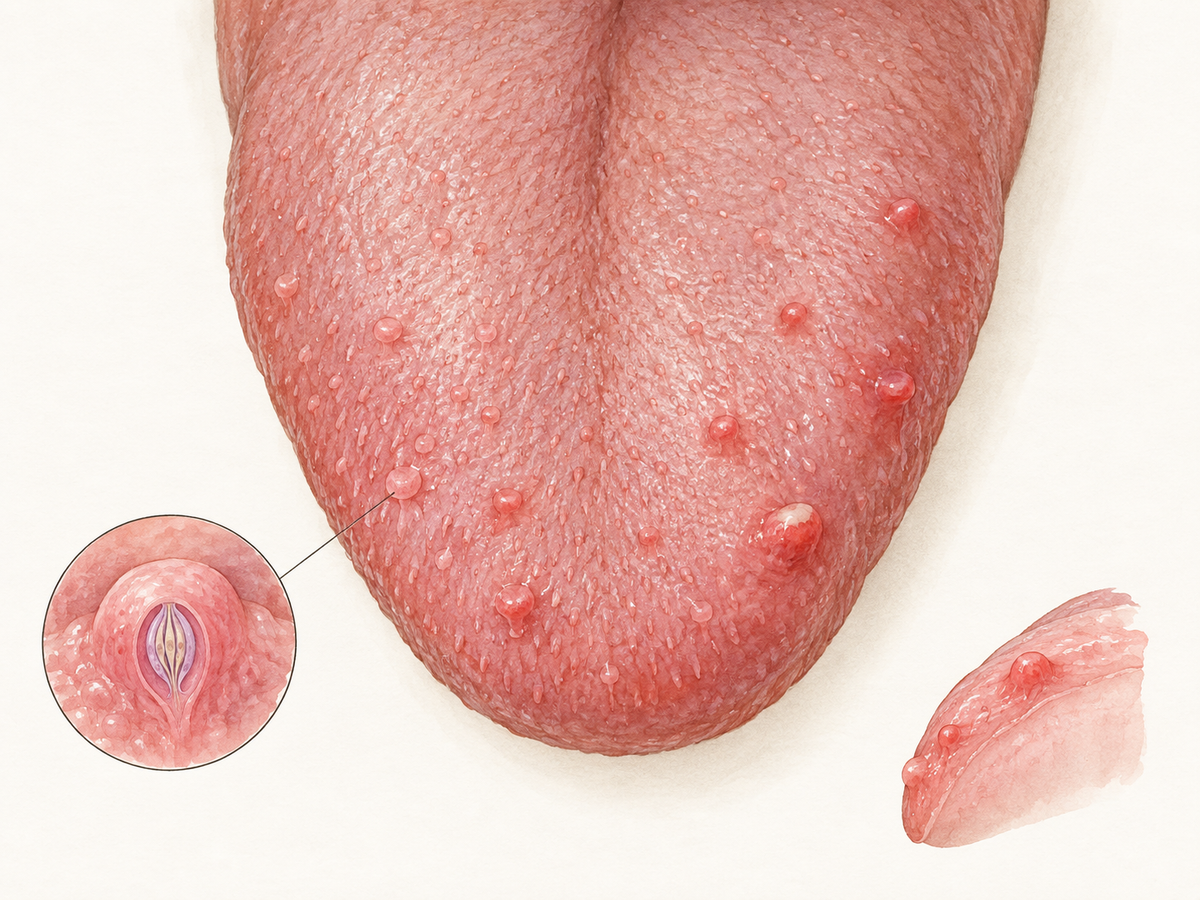











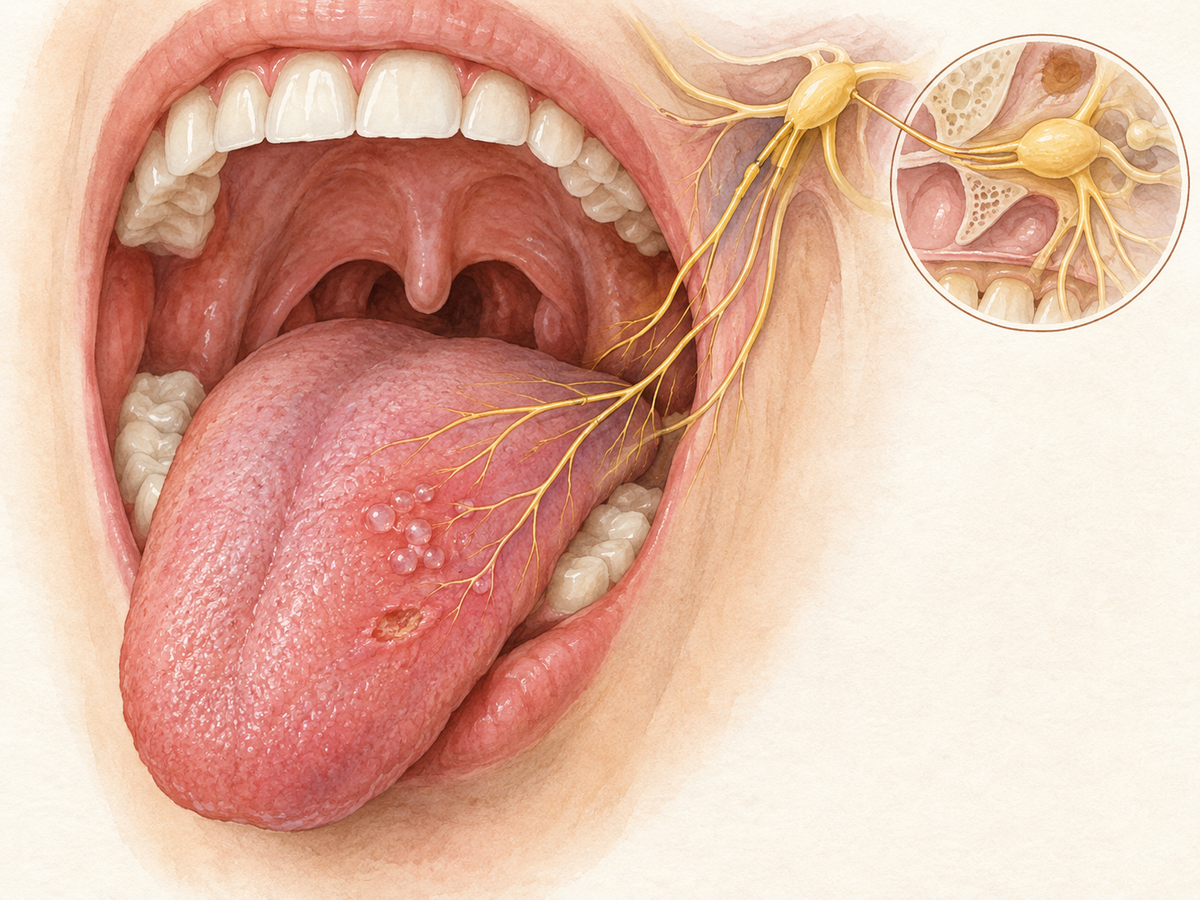
Herpes on the tongue is a viral infection caused by the herpes simplex virus, most often herpes simplex virus type 1 (HSV-1). It can cause tingling, tiny fluid-filled blisters, and painful open sores on the tongue. The infection is contagious and can come back, but it is common and manageable. Early treatment and simple home care can ease discomfort and lower the risk of spreading it.
If you have painful tongue sores and are not sure whether they are herpes or canker sores, get them checked. Herpes sores are contagious; canker sores are not.
Symptoms and Stages
Herpes on the tongue tends to follow a pattern, though not everyone has every stage. Tongue involvement is more common during a first infection. In otherwise healthy people, repeat herpes outbreaks usually appear on the lips. HSV-1 overview
- Tingling or itching first. Before a sore appears, you may feel tingling, burning, itching, or a strange sensation in one spot. This early phase is called a prodrome. Pain and virus levels are often highest in the first 24 hours. Natural history study
- Tiny fluid-filled blisters. Small bumps form. On a wet surface like the tongue, these blisters can break quickly.
- Open painful sores. The blisters may pop and become shallow ulcers. Eating, drinking, and talking can hurt.
- Crusting and healing. On dry areas such as the lips, sores may scab. Inside the mouth, they often heal without a hard crust. Most healthy people heal within about 7 to 14 days. Oral medicine update
A first herpes infection can feel more like a flu-like illness. You may have fever, swollen glands in the neck, and a very sore mouth. The tongue, gums, lips, and roof of the mouth can be involved. When the mouth is this sore, drinking enough fluid becomes especially important. Oral medicine update
Herpes sores vs. canker sores
These two are often confused, but they are not the same.
| Feature | Herpes on the tongue | Canker sore |
|---|---|---|
| Contagious? | Yes | No |
| Cause | Herpes simplex virus | Not viral; may follow stress or minor injury |
| Typical spots | Tongue, roof of mouth, lips | Inside lips or cheeks, under tongue |
| Starts as | Tingling, then blisters | Shallow sore without a blister stage |
Canker sores are not contagious and are a separate condition from herpes. Herpes sores can spread, so the difference matters. Differential diagnosis guide
How It Spreads
Herpes simplex virus spreads through direct contact with infected saliva, sores, or the moist lining of the mouth and genitals. HSV-1 is the most common cause of oral herpes. HSV-2 usually causes genital herpes but can also infect the mouth, most often through oral sex. HSV-1 overview
Common ways it spreads include:
- kissing someone who has the virus
- sharing utensils, cups, towels, lip balm, or razors
- oral sex with a partner who has genital herpes
- touching a sore and then touching another part of the body
The virus can spread even when no sores are visible. People can shed the virus in saliva on days with no symptoms. One analysis found that at least 70% of people shed HSV-1 in saliva at least once a month without knowing it. Oral shedding analysis
Things that raise the chance of getting or passing the virus include close contact with an infected person, a weakened immune system, and new sexual partners.
Why It Comes Back
After the first outbreak heals, the virus does not leave the body. It moves into a nerve cluster near the face called the trigeminal ganglion and stays there in a dormant, or “sleeping,” state. Oral medicine update
Later, certain triggers can wake the virus up and cause another outbreak. Common triggers include:
- stress
- fever or illness
- sunlight or UV exposure
- menstruation or hormonal changes
- irritation or minor injury in the mouth
- a weakened immune system
A recurrence does not mean you have poor hygiene or that a partner was unfaithful. The virus was already in your body. Some people have repeat outbreaks, while others never notice another one.
Treatment Options
Acyclovir, valacyclovir, and famciclovir are prescription antiviral medicines used to treat herpes infections. They can shorten an outbreak and reduce pain when started early. Many clinicians recommend starting them within 72 hours of the first tingle or sore. The prodrome stage is a good chance to act. Oral medicine update European herpes treatment guidelines
Topical antiviral creams or ointments have limited benefit, especially for sores inside the mouth. They are not a reliable substitute for oral antiviral pills when treatment is needed. Oral mucosal disorder strategies
Severe cases may need antiviral medicine given by IV in a hospital. This is more likely for people who cannot drink, have a weakened immune system, or have very widespread sores. Oral medicine update
If you are pregnant, breastfeeding, have kidney disease, or take other medicines, talk with a clinician before starting any antiviral. Dosing, safety, and drug interactions need to be checked for your situation.
Home Outbreak Care
While the sore is healing, you can reduce discomfort at home.
- Drink cold liquids, such as water or milk. Cold fluids can soothe and help prevent dehydration.
- Eat soft, bland foods that do not sting. Try yogurt, applesauce, oatmeal, or scrambled eggs.
- Rinse gently with warm salt water. Mix about half a teaspoon of salt in a cup of warm water, swish, and spit.
- Ask a pharmacist or clinician about an oral pain gel, such as one containing lidocaine. Use it exactly as directed. Oral mucosal disorder strategies
- Rest and drink enough fluids, especially if eating hurts.
Do not touch, squeeze, or pop blisters. This can irritate the sore and may spread the virus to your fingers or other areas. Differential diagnosis guide
Antibiotics will not help. Herpes is caused by a virus, and antibiotics only treat bacteria.
Preventing Spread
During an outbreak, take simple steps to protect others.
- Avoid kissing and close face-to-face contact until sores are fully healed.
- Do not share utensils, cups, towels, lip balm, or razors.
- Wash your hands with soap and water after touching your mouth or face.
- Avoid touching your eyes or genitals after touching a sore.
- If you have oral sex, use a condom or dental dam. This lowers but does not eliminate the risk, because the virus can be on skin not covered by the barrier.
For people with frequent or bothersome recurrences, a clinician may suggest a daily antiviral to reduce outbreaks and lower the chance of passing the virus to a partner. In studies of genital herpes, once-daily valacyclovir reduced transmission to uninfected partners by about half. Valacyclovir transmission study Daily suppressive therapy is an option to discuss with a clinician if you are concerned about passing the virus.
When to Get Help
Most tongue herpes outbreaks get better with home care, but some situations need prompt medical attention.
See a dentist or clinician if you have:
- trouble swallowing or cannot drink enough fluids
- a high fever or severe body aches
- sores that are spreading quickly or lasting more than two weeks
- eye pain, redness, sensitivity to light, or blurred vision
- a weakened immune system from medicine, cancer treatment, or another medical condition
- possible exposure to a newborn, because neonatal herpes can be serious
If the cause of a mouth sore is unclear, a swab test called a PCR test can confirm whether the herpes virus is present. Diagnostic case series This can help when the diagnosis is not obvious.
Early care matters. Antiviral medicine works best when started early, so do not wait until a sore is large and painful before asking for help.
Outlook and Recurrence
Oral herpes is common, and having it is not a reason to feel ashamed. Many people carry the virus, and some never know it. Over time, outbreaks often become milder and less frequent.
The virus stays in the body in a dormant state and can wake up again. You cannot completely remove it, but you can reduce some triggers:
- manage stress when possible
- get enough sleep
- protect your lips from excessive sun
- avoid known triggers when you can
Keep up with routine medical and dental care. If you get repeated tongue sores, tell your dentist or clinician. They can help confirm the cause and build a plan for managing outbreaks and protecting others.
This article has been reviewed by an oral health professional for accuracy. It is intended to provide general educational information and should not be used as a substitute for personalized medical advice, diagnosis, or treatment. If you have questions or concerns about your oral health, please consult a dentist, physician, or other qualified healthcare provider.