
Lip biting can leave your lips sore, cracked, bleeding, or marked by dark spots, and repeated biting raises the chance of infection and scarring. The good news is that most lip damage heals once the repeated trauma stops. You can reduce the habit by tracking your triggers, using a simple replacement, healing dry lips, and treating underlying stress or anxiety.
Rule of thumb: Do not try to stop by willpower alone. Keep your lips comfortable, swap the bite for a harmless action, and treat the trigger.
What Lip Biting Does to Your Lips
Biting your lips, especially the same spot, creates a cycle. The surface stays raw, so it feels rough. That roughness makes you want to bite again.
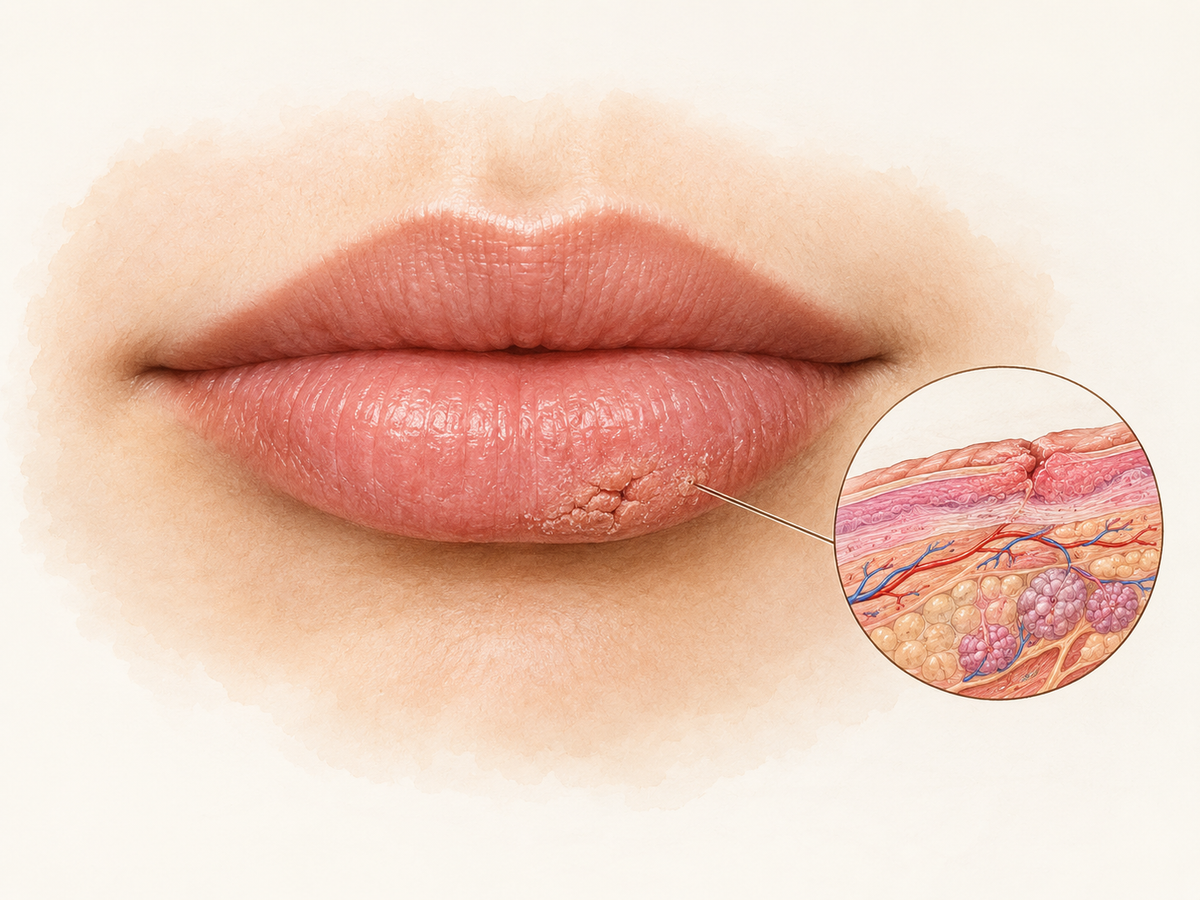
Over time, repeated trauma can leave the area scarred, thickened, and paler than the surrounding skin, according to a review of chronic lip-biting patterns. Dark spots, called post-inflammatory hyperpigmentation, are another possible aftereffect. These are dark marks that appear after irritation or injury.
Small cracks or splits can bleed and let germs in, which raises the risk of infection. Most acute lip sores calm down within a few days and heal in about 10 to 14 days once the repeated injury stops, according to guidance on oral traumatic lesions.
If the biting continues, the damage can build up. In some cases, chronic lip biting has been linked to lasting scar tissue that needed professional treatment, as described in a published case report. Most people heal well when they interrupt the habit early.
Why You Bite Your Lips
Lip biting is not a character flaw. It is usually an automatic pattern.
Common triggers include stress, anxiety, deep focus, boredom, and dry or rough lips. The habit can run on a habit loop: a cue such as a rough spot or an anxious feeling, a routine such as biting, and a short-lived sense of relief. Because the loop is fast and unconscious, you may not notice until your lip already hurts.
Lip biting is one of a group of habits called body-focused repetitive behaviors (BFRBs), meaning repeated self-grooming actions. Research on these behaviors notes that they are often triggered by anxiety, tension, or boredom. A review of chronic lip-biting also found that the habit can worsen during stressful periods and may happen without a person being fully aware of it.
Find Your Triggers
For two or three days, keep a simple note on your phone or paper. You do not need to be perfect. The goal is to notice patterns.
- Note the time and place.
- Note what you were doing, such as working, scrolling, or watching TV.
- Note what you felt right before biting. Were you tense, bored, focused, or worried?
- Note the condition of your lips. Were they dry or flaky?
- Note what happened after. Did the urge pass or did your lip feel sore?
Then look for patterns. If the urge comes with worry, the trigger is mostly emotional. If it comes when your lips feel dry or rough, the trigger is physical. Physical triggers like dry lips or chapped edges are often the easiest to fix first. This self-monitoring step is the awareness part of many habit-change methods.
Break the Moment with a Replacement
Once you know the trigger, pick a replacement that fits.
| Trigger | Replacement to try |
|---|---|
| Anxiety or stress | Stress ball, fidget tool, or one slow breath |
| Dry lips or rough edges | Apply a bland lip balm or ointment |
| Boredom or oral fixation | Sugar-free gum or a sip of water |
| Deep focus | Keep a small fidget object in one hand |
The idea is habit replacement, not willpower. You are giving the urge somewhere else to go. Chewing sugar-free gum can satisfy the need to use the mouth, or oral fixation, without hurting tissue.
Habit reversal training uses a competing response: an action that is incompatible with biting, like pressing your tongue gently to the roof of your mouth or holding a small object. Self-help versions of these techniques have shown promise for body-focused repetitive behaviors, including lip biting, according to research on internet-based tools.
Heal and Protect Damaged Lips
Healing the surface makes it easier to stop. If your lips are smooth and comfortable, there is less to bite.
- Apply a bland ointment or plain lip balm throughout the day, especially before bed.
- Drink enough water.
- Use a humidifier if indoor air is dry.
- Avoid lip licking. Saliva evaporates and can make lips drier.
- Avoid picking at peeling skin.
Do not peel the loose skin. That reopens the surface and can invite infection. Most traumatic lip sores heal once the repeated irritation is removed. Healing the surface removes the rough edges that invite more biting and helps broken skin stay clean.
Treat the Root Cause
If biting is driven by anxiety, stress, or trouble focusing, treat that driver too.
Try slow breathing: inhale through your nose for a count of four, hold briefly, and exhale for a count of six. Or use a grounding technique, such as naming five things you can see, four you can touch, three you can hear, two you can smell, and one you can taste. These tools can help settle the nervous system in the moment.
If stress or anxiety is constant, talking with a therapist can help. Cognitive behavioral therapy has been used for chronic lip-biting and related habits, according to a review of treatment outcomes. Internet-based self-help programs that teach habit reversal or decoupling have also shown promise, especially when used regularly, according to research on self-help for body-focused repetitive behaviors.
For some people, prescribed medication for anxiety or depression is part of the plan. That is a conversation with a doctor or psychiatrist. If biting is anxiety-driven, habit replacement alone may not last. Treating the trigger makes the change stick.
Know When to Get Help
Most lip biting is not an emergency. But get professional help if you notice:
- Bleeding that does not stop or keeps coming back.
- A sore or split that does not heal after about two weeks of protecting the area.
- Pus, spreading redness, warmth, or swelling.
- Fever or feeling generally unwell.
- Severe or worsening pain.
- Anxiety or low mood that disrupts work, sleep, or relationships.
A sore that does not heal after the cause is removed may need a professional look. Clinical guidance on oral traumatic lesions recommends a follow-up period of at least two to three weeks for chronic lesions after the likely cause is removed.
Signs like fever, spreading redness, or difficulty swallowing can point to a deeper infection and need urgent evaluation. Dental infection guidance lists these as red flag signs that need prompt attention. If the main issue is anxiety or mood, a therapist or physician is the right first step.
Stay Stopped After a Slip-Up
A slip-up is not failure. It is information.
If you bite again, ask: What time was it? What was I feeling? Were my lips dry? Then adjust the replacement.
Do not rely on willpower alone. Keep balm nearby, drink water, and change the cue. Do not ignore dry lips or rough edges, because they pull you back into the loop.
Do not shame yourself after a setback. Shame makes the habit harder to notice and harder to change. Celebrate small wins: a morning without biting, a rough patch that healed, or a replacement that worked once. Over time, the new response becomes the automatic one.
This article has been reviewed by an oral health professional for accuracy. It is intended to provide general educational information and should not be used as a substitute for personalized medical advice, diagnosis, or treatment. If you have questions or concerns about your oral health, please consult a dentist, physician, or other qualified healthcare provider.