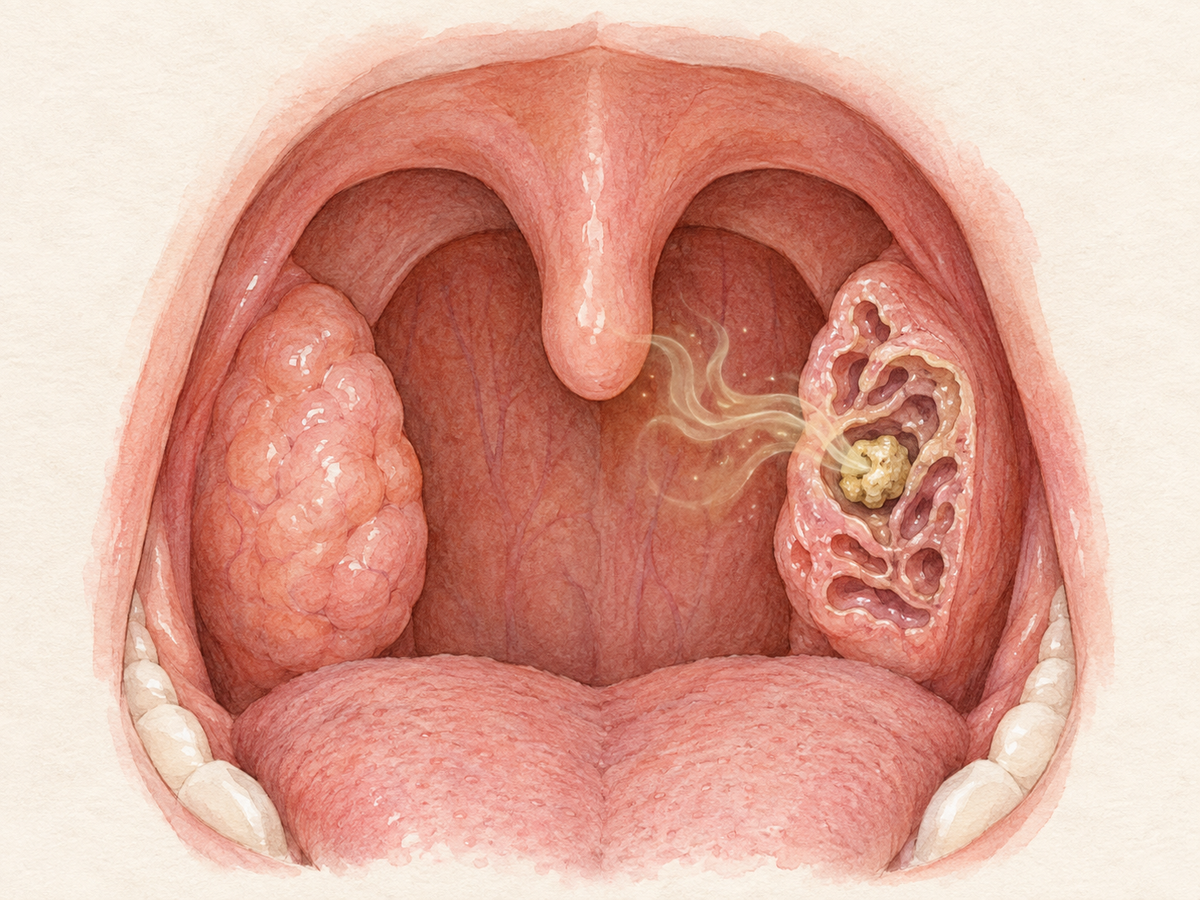






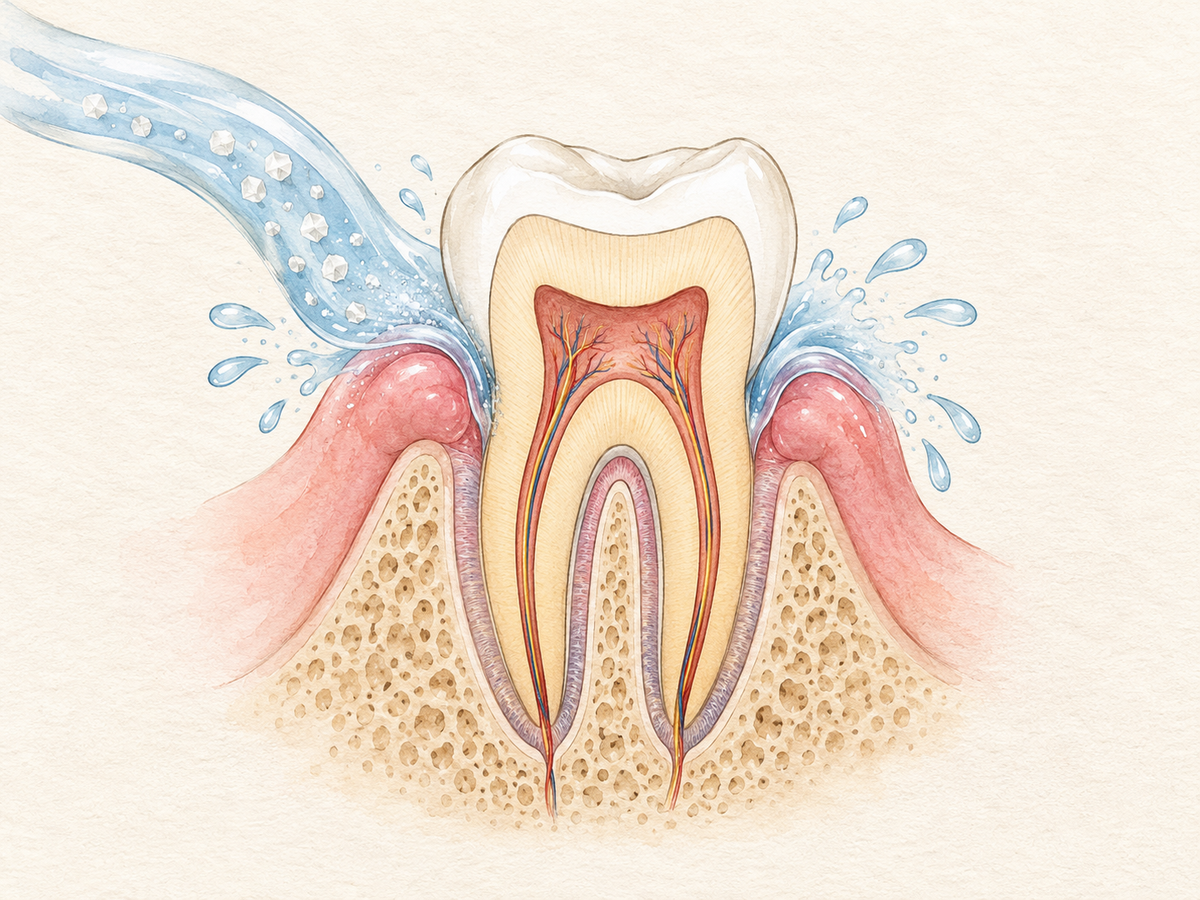
A salt water mouth rinse can soothe minor gum irritation, mouth sores, and soreness after dental work. It is a short-term comfort measure, not a cure for infection or a replacement for brushing and flossing. It may reduce mild swelling and rinse away loose debris, but it cannot fix cavities, abscesses, or serious gum disease.
The main thing to know: salt water rinses are a low-cost comfort aid, not a treatment for infection. Use them short-term for mild mouth soreness, and see a dentist if symptoms last more than 5–7 days or get worse.
What Salt Water Actually Does
Salt water works mainly through a process called osmosis. That means salt draws fluid out of puffy or swollen tissue. In the mouth, this can reduce mild inflammation and ease soreness in the gums or inner cheeks. This is one reason salt-based rinses may help calm irritated gums, as described in a systematic review of salt-based mouth rinses.
Swishing the rinse also helps loosen and wash away food particles and other loose debris around a tender area. It is not as effective as brushing, but it can keep a sore spot cleaner after eating.
Salt water may also create a less welcoming environment for some mouth germs. Some studies report that saline rinses can lower the number of certain bacteria in the mouth. However, salt water does not sterilize the mouth. It is also not as strong or consistent as an antiseptic rinse like chlorhexidine, which dentists may prescribe after certain procedures.
What It Can and Can’t Help
Here is a quick comparison.
| May help | Cannot treat |
|---|---|
| Minor gum irritation | Cavities |
| Canker sores and mouth ulcers | A dental abscess |
| Healing after tooth removal, if dentist approves | Severe gum disease |
| Short-term soreness after gum surgery, if dentist approves | Persistent bad breath |
Some of these uses have better evidence than others. A systematic review found that salt-based rinses were associated with reductions in plaque and gum inflammation, although one study found no extra benefit beyond regular brushing and flossing.
After tooth removal, warm salt water is a common and low-cost way to help keep the area clean. A randomized study recommended warm salt water rinses twice daily after extraction as a practical measure to reduce the risk of dry socket, a painful healing problem after a tooth is pulled.
One clinical study also reported that a salt water mouth rinse had anti-inflammatory effects similar to a 0.12% chlorhexidine rinse after minimally invasive gum surgery.
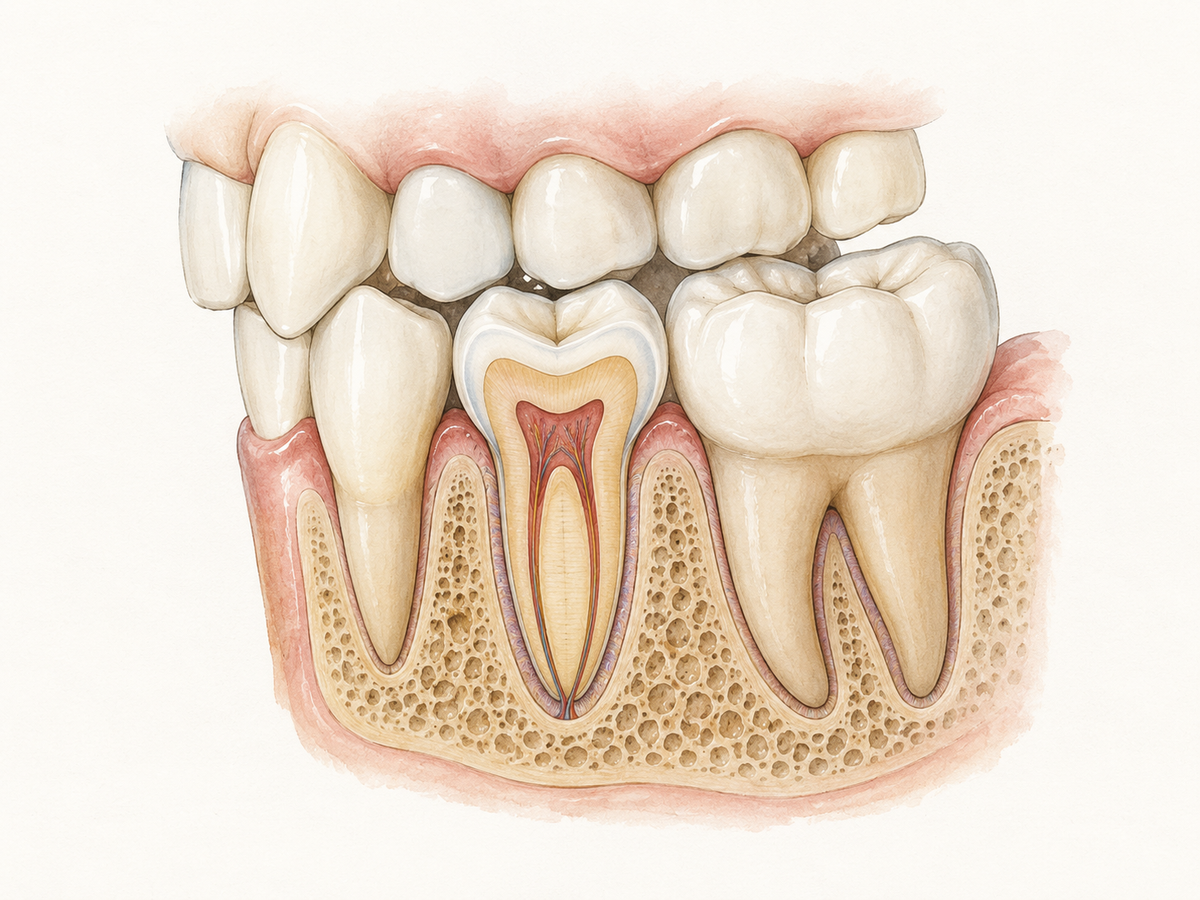
But a rinse cannot repair a cavity, drain an abscess, or reverse severe gum disease. A dental abscess is a pocket of infection or pus at a tooth, and it needs professional care. Ongoing bad breath may be caused by decay, gum disease, or another health issue, so a rinse will not solve it.
How to Make and Use It
Follow these steps for a basic rinse:
- Fill a cup with 8 ounces of warm water, about 1 cup. It should be comfortably warm, not hot.
- Add 1/2 teaspoon of table salt.
- Stir until the salt dissolves.
- Take a small sip and swish gently for 15–30 seconds.
- Spit it out. Do not swallow.
- Use it 2–3 times per day for short-term relief, unless your dentist tells you otherwise.
Getting the concentration right matters. A rinse that is too weak may not help, and one that is too strong can irritate your mouth. Practitioners are encouraged to give clear preparation instructions for this reason, according to a British Dental Journal letter.
If you just had a tooth removed, wait at least 24 hours before rinsing unless your dentist gives different instructions. Rinsing too soon or too forcefully can disturb the blood clot that protects the healing socket, as noted in a clinical study on extraction wound rinsing.
Never use salt water as a substitute for brushing, flossing, or a mouthwash your dentist prescribed.
Safety and Common Mistakes
Keep these cautions in mind:
- Do not make the rinse too salty. Extra salt can dry out and irritate mouth tissue.
- Do not use it indefinitely. Short-term use is usually fine, but long-term daily use may lead to dryness or irritation.
- Spit, do not swallow. Swallowing salt water adds extra sodium. If you have high blood pressure or need a low-salt diet, talk with your doctor or dentist before repeated use.
- Supervise children. Only use the rinse with a child who can swish and spit reliably.
- Avoid open wounds or surgery areas unless your dentist says it is safe. Salt water is not a treatment for deep or infected wounds.
- Stop if pain or irritation gets worse.
When to See a Dentist
Salt water is comfort care, not a diagnosis or a treatment for infection. See a dentist if you have any of these signs:
- Swelling in the mouth or face
- Fever
- Pus or bad-tasting drainage
- Severe pain that does not improve
- Teeth that feel loose
- Bleeding that will not stop
- Symptoms that do not improve within 5–7 days
Swelling, fever, and pus can be warning signs of an infection that needs professional attention. Do not rely on a rinse to manage them.
Bottom Line
A salt water mouth rinse is a simple, low-cost way to soothe minor mouth irritation and support recovery after dental work when used correctly. It does not replace brushing, flossing, prescribed mouthwash, or dental treatment. Use the correct dilution for short-term relief, and contact a dentist if anything persists or worsens.
This article has been reviewed by an oral health professional for accuracy. It is intended to provide general educational information and should not be used as a substitute for personalized medical advice, diagnosis, or treatment. If you have questions or concerns about your oral health, please consult a dentist, physician, or other qualified healthcare provider.