









A swollen lip is usually your body reacting to a local trigger such as an allergy, an infection, an injury, or irritation. Most cases improve with simple care like a cool compress and avoiding picking. But if swelling also involves your tongue or throat, or you have trouble breathing, swallowing, or feel dizzy, call 911 or local emergency services right away.
Quick sorting rule: Sudden itching or hives usually points to an allergy. A hot, painful, one-sided lip often points to an infection. Swelling right after a bite, burn, or dental work points to an injury.
Why Lips Swell So Easily
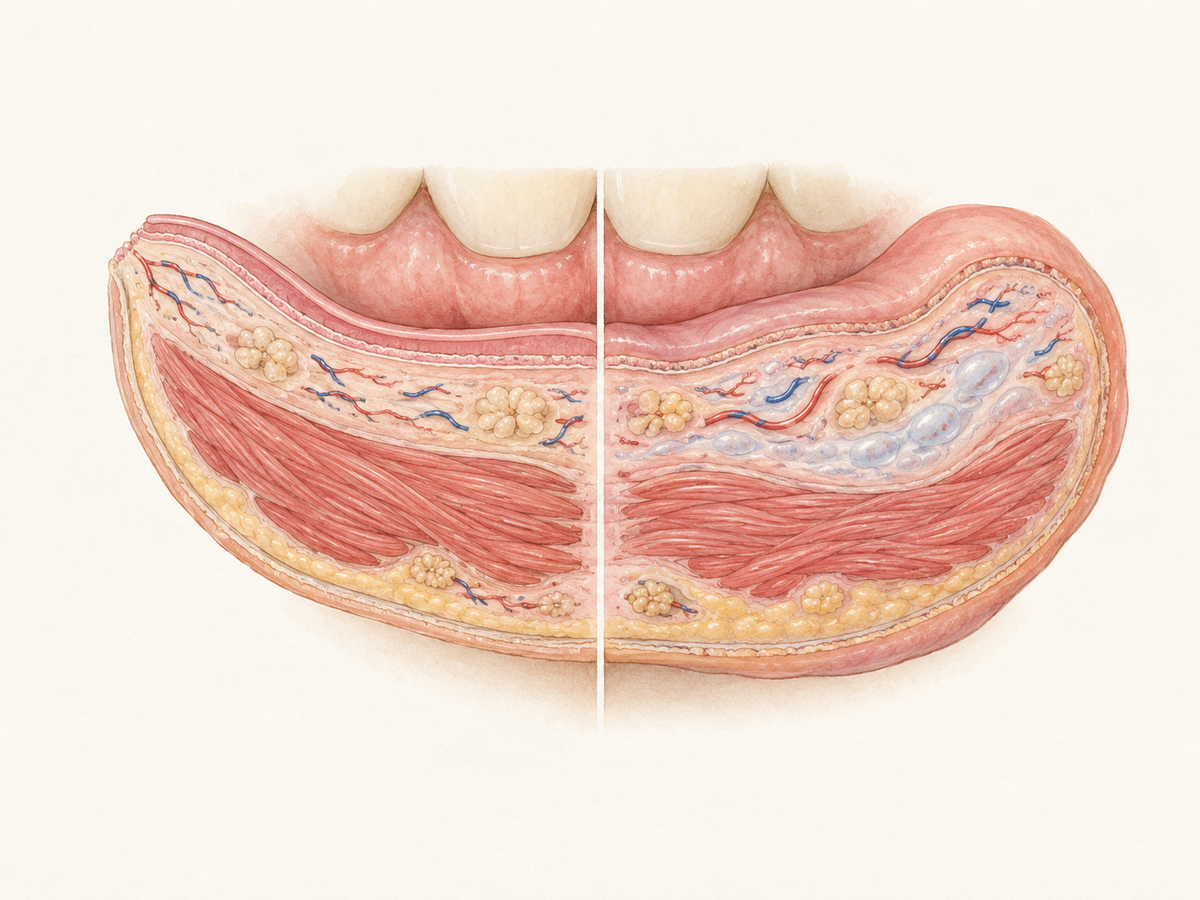
Your lips have very thin skin, many blood vessels, and loose tissue underneath. That combination makes it easy for fluid to collect quickly.
This visible fluid buildup is called edema, or swelling. A small trigger, such as a bite, new lipstick, or certain food, can cause a puffy lip that looks worse than it is.
So a dramatic-looking lip is not always a sign of a dangerous problem.
Read the Pattern: Sudden, One-Sided, or Recurring
Before you treat a swollen lip, look at the pattern.
| Clues | Likely direction |
|---|---|
| Sudden, itchy, with hives or flushed skin | Allergy |
| Painful, hot, red, one-sided | Infection |
| Right after a bite, burn, injury, or dental work | Trauma |
| Dry, cracked, scaling, burning | Irritation or cheilitis |
| Repeated swelling, sometimes no itch | Angioedema or chronic cause |
This table is a rough guide, not a diagnosis. Angioedema is deep swelling under the skin. It can be allergic or non-allergic, and it may not itch or come with hives.
Emergency Signs: When Swollen Lips Are Dangerous
Call 911 or emergency services if you or someone else has a swollen lip with any of these signs:
- tongue or throat feels swollen
- trouble breathing or noisy breathing
- trouble swallowing or drooling
- voice changes
- widespread hives, dizziness, or fainting
- swelling that spreads quickly to the face or neck
Do not wait to see if home care helps. If you have a prescribed epinephrine autoinjector for severe allergy, follow your emergency action plan while waiting for help.
Lip swelling alone is usually not an emergency. These signs change the urgency, according to anaphylaxis guidance.
What’s Likely Causing It
Allergic reaction. This often comes on fast, with itch or hives. Common triggers include foods, medicines, lip products, cosmetics, and insect stings. A severe full-body allergy is called anaphylaxis and needs emergency care.
Infection. A cold sore is a viral infection that often starts with tingling, then forms blisters. A bacterial skin infection called cellulitis can make the lip red, hot, painful, and swollen, sometimes on one side. Angular cheilitis is cracking and soreness at the corners of the mouth, often from yeast or bacteria.
Trauma. Bites, burns, and dental work can cause immediate swelling. It usually improves as the injury heals, but broken skin can become infected.
Irritants or dryness. Lip licking, harsh weather, toothpaste, mouthwash, lipstick, or balm ingredients can irritate lips. This can cause dry, cracked, scaling, burning lips. That inflammation is called cheilitis, which means lip inflammation. Everyday habits like lip licking can keep it going, according to practical guidance on lip care.
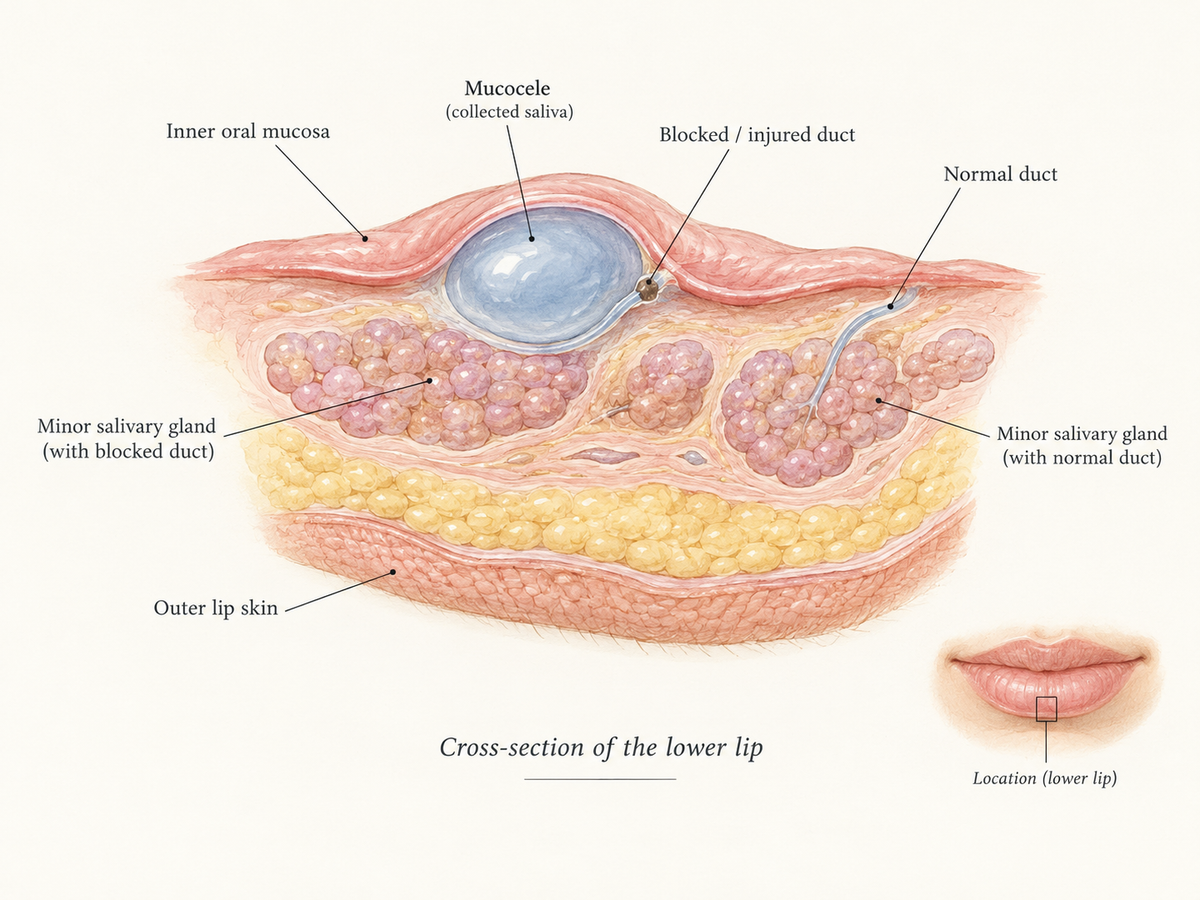
Less common causes. Angioedema can be allergic, medication-related, or have no clear cause. Some blood pressure medicines and nonsteroidal anti-inflammatory drugs can trigger it. Persistent lip swelling can also be a sign of a whole-body condition such as Crohn’s disease or sarcoidosis, according to reviews on lip swelling. Rarely, a painless, long-lasting lip swelling may need more testing to sort out the cause, as described in clinical guidance on lip enlargement.
Immediate Relief You Can Try Safely
For mild lip swelling, start with these steps.
- Wrap a cold pack or ice in a clean cloth. Hold it on the lip for 10 to 15 minutes. Do not put ice directly on skin.
- If you suspect an allergy and can take an oral antihistamine safely, it may help. An antihistamine is less likely to help non-allergic angioedema.
- If there is minor broken skin or a mouth sore, rinse with warm salt water. Mix about half a teaspoon of salt in a cup of water.
- Apply a plain, fragrance-free lip balm or petrolatum if dryness or irritation is present.
- Avoid scratching, picking, squeezing, or licking the area.
Do not apply numbing gels, strong essential oils, or unknown home remedies. They can irritate the skin more.
If any emergency sign is present, skip home care and call for emergency help.
Treatment by Cause
Treatment depends on the trigger.
| Cause | Typical care |
|---|---|
| Allergy | Avoid the trigger; antihistamine if recommended; epinephrine for anaphylaxis |
| Cold sore | Antiviral medicine if prescribed by a clinician |
| Bacterial infection | Antibiotic if prescribed by a clinician; wound care |
| Angular cheilitis | Antifungal or antibiotic if prescribed; barrier ointment |
| Trauma | Ice first; wound care; pain relief |
| Dryness or cheilitis | Barrier ointment; steroid cream if prescribed |
Some angioedema types do not respond to antihistamines and need targeted treatment prescribed by a doctor, according to an overview of angioedema.
If a medicine is the suspected trigger, do not stop it on your own. Call the prescribing clinician. They can decide whether it is safe to pause or switch.
Persistent or recurring swelling may need allergy testing or a medical evaluation to find the cause.
When to See a Doctor or Dentist
Book an appointment if you notice any of these:
- swelling lasts more than 1 to 2 weeks
- swelling keeps coming back
- swelling is one-sided and painful
- fever, pus, or redness that spreads
- swelling with no clear cause
- mouth sores, gum swelling, or signs of a dental infection
For lip or mouth sores, gum swelling, or possible tooth infection, a dentist is a good first step. For possible allergy, medication reaction, or unexplained repeated swelling, see a doctor or allergist.
Preventing Another Episode
Simple habits can lower the chance of repeat swelling.
- Track foods, lip products, medicines, and stressful periods to spot triggers.
- Use a fragrance-free lip balm with sunscreen.
- Manage known allergies as recommended by your clinician.
- Do not pick, bite, or repeatedly lick your lips.
- For repeated cold sores or infections, ask a clinician whether preventive treatment makes sense.
Keeping the lips protected with a bland lip balm and UV protection is one of the most practical daily steps, according to prevention guidance for lip irritation.
If a pattern is unclear or keeps returning, start with your doctor or dentist. Bring your trigger notes and the names of any lip products or medicines you use.
 Best Overall
 Best Value
 Best for Sensitive Teeth
This article has been reviewed by an oral health professional for accuracy. It is intended to provide general educational information and should not be used as a substitute for personalized medical advice, diagnosis, or treatment. If you have questions or concerns about your oral health, please consult a dentist, physician, or other qualified healthcare provider.