















Lie bumps are small, sore spots that can pop up suddenly on the tip or sides of your tongue. The dental name is transient lingual papillitis, which means short-term swelling or irritation of the normal bumpy structures on your tongue. They are usually harmless, are not contagious, and clear up on their own within a few days to two weeks, according to a clinical review of transient lingual papillitis.
Most lie bumps need no treatment and clear on their own. If a bump lasts more than two weeks, grows, bleeds, or comes with fever or trouble swallowing, get it checked.
Why They Appear
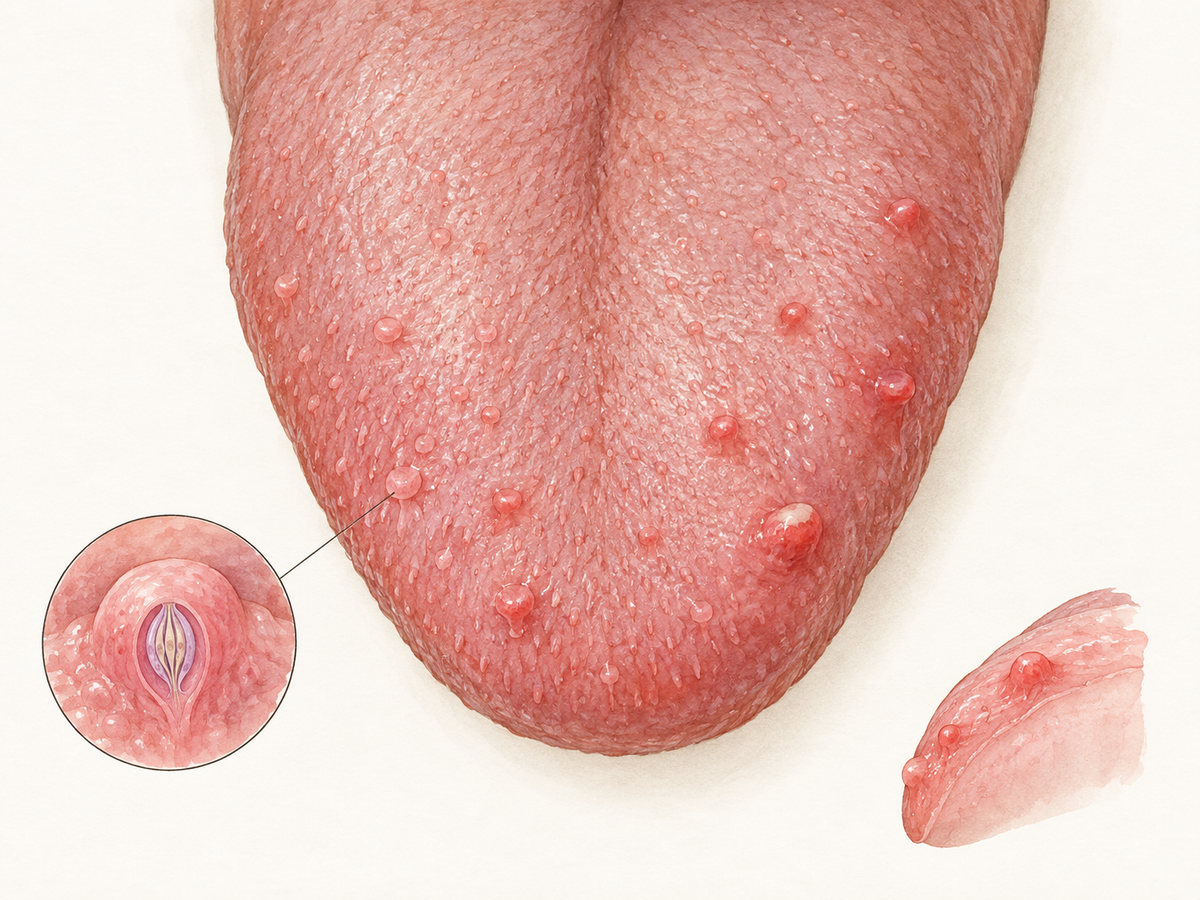
To understand lie bumps, it helps to know what your tongue normally looks like. Fungiform papillae are the tiny mushroom-shaped bumps on the front and sides of your tongue. They hold many of your taste buds. When one or more of these bumps becomes irritated, it can swell, turn red or white, and feel tender.
Lie bumps happen when those normal papillae become inflamed. That does not mean you have an infection or did something wrong. The exact cause is not fully understood, but research describes it as a temporary inflammatory reaction. Possible triggers reported in the dental literature include:
- Stress and hormonal changes
- Spicy or acidic foods
- Minor tongue injuries, such as biting your tongue
- Irritation from a sharp tooth edge, braces, or recent dental work
- Allergies to foods or oral care products
- Acid reflux or stomach acid reaching the tongue
- Lack of sleep or poor nutrition
These factors may make the tongue papillae more reactive, according to a review on transient lingual papillitis. Lie bumps are not a sign of poor hygiene, and they are not something you catch from another person.
What They Look and Feel Like
Lie bumps usually look like one or several small raised spots near the front or side edges of the tongue. They may be red, pink, white, or even yellowish. Some people get a single bump; others get a small cluster.
The most common sensations include:
- Tenderness or soreness
- A burning or tingling feeling
- Sensitivity to hot, spicy, or acidic foods
- Mild pain when eating or talking
A case report on transient lingual papillitis describes these bumps as tender raised spots that can make eating spicy or hot foods uncomfortable.
Most episodes clear within a few days. Some may last up to one to two weeks, and a few people may have symptoms for a bit longer if there is more widespread tongue inflammation. Some people also get lie bumps repeatedly.
Lie Bumps vs. Cold Sores and Canker Sores
Lie bumps can look and feel like other mouth sores, but they are different conditions.
| Feature | Lie bumps | Canker sores | Cold sores |
|---|---|---|---|
| Location | Usually on the tip or sides of the tongue | Inside the lips, cheeks, or sometimes the tongue | Usually on or around the lips |
| Appearance | Small red or white raised bumps | Open, shallow sores with a white or yellow center and red edge | Fluid-filled blisters that may crust over |
| Pain | Tender, burning, or stinging, especially with food | Sore, especially when eating or drinking | Tingling or burning before the blister, then sore |
| Contagious? | No | No | Yes |
Lie bumps are not cold sores or herpes. In reported cases of typical lie bumps, testing for the herpes simplex virus has been negative, according to a clinical review. Cold sores are caused by a virus and can spread through close contact. Lie bumps do not require antiviral treatment.
Canker sores are open ulcers, not raised bumps. They often show up on the soft tissue inside the lips or cheeks. A dentist or doctor can usually tell these conditions apart by looking at the area.
At-Home Relief and What to Avoid
Most lie bumps get better on their own. The goal at home is to reduce irritation and keep yourself comfortable while the tongue heals.
What may help:
- Cold drinks or ice water
- Sucking on a piece of ice
- Soft, bland foods such as yogurt, applesauce, or scrambled eggs
- A gentle saltwater or baking soda rinse
- A soothing oral gel if the bump is very uncomfortable
- Gentle brushing and flossing without scrubbing the tongue
What to avoid:
- Popping, squeezing, scraping, or biting the bump
- Alcohol-heavy mouthwash
- Very spicy, acidic, salty, or rough foods
- Very hot drinks or foods
The usual advice is to avoid tongue friction and irritating foods, and to use simple comfort measures like cold foods or saline rinses, according to the clinical review. These steps ease symptoms, but they do not make the bump disappear instantly or prevent every future episode.
When to See a Dentist or Doctor
Most lie bumps are harmless and do not need professional treatment. However, not every tongue bump is a lie bump, so it is worth having a professional look if something seems unusual.
See a dentist or doctor if you have:
- Bumps that last more than two weeks
- A bump that is growing, bleeding, or spreading
- Severe pain
- Trouble swallowing
- Fever along with tongue or mouth bumps
- White patches or an area that feels firm or thickened
In general, a mouth sore or bump that has been present for two weeks or more should be evaluated, because normal mouth tissue usually heals faster than that. Clinical guidance on mouth lesion evaluation recommends having persistent sores assessed. Some oral health guidelines suggest checking a persistent lesion within 10 to 14 days when there is no clear diagnosis.
If the bumps come back often, keep a few phone pictures and note when they appear, what you ate or drank beforehand, and how long they last. These notes can help a dentist or doctor spot a pattern.
Preventing Future Outbreaks
Prevention is not guaranteed, but noticing patterns can reduce how often lie bumps show up.
Try these steps:
- Keep a simple log of dates, possible triggers, stress level, and sleep.
- Look for repeat offenders, such as cinnamon gum, very spicy foods, or acidic snacks.
- Avoid one likely trigger at a time to see if it helps.
- Manage stress and aim for adequate sleep.
- If acid reflux or allergies seem connected, talk to a doctor or dentist about treatment.
A case report on a recurrent form of lie bumps found that avoiding certain flavored gums stopped a patient’s outbreaks. This shows how trigger awareness can help, even though it may take some detective work.
Lie bumps are a temporary tongue nuisance, not a serious disease. Treat your tongue gently, avoid obvious irritants, and have anything unusual checked if it does not go away.
 Best Overall
 Best Value
 Best for Sensitive Teeth
This article has been reviewed by an oral health professional for accuracy. It is intended to provide general educational information and should not be used as a substitute for personalized medical advice, diagnosis, or treatment. If you have questions or concerns about your oral health, please consult a dentist, physician, or other qualified healthcare provider.