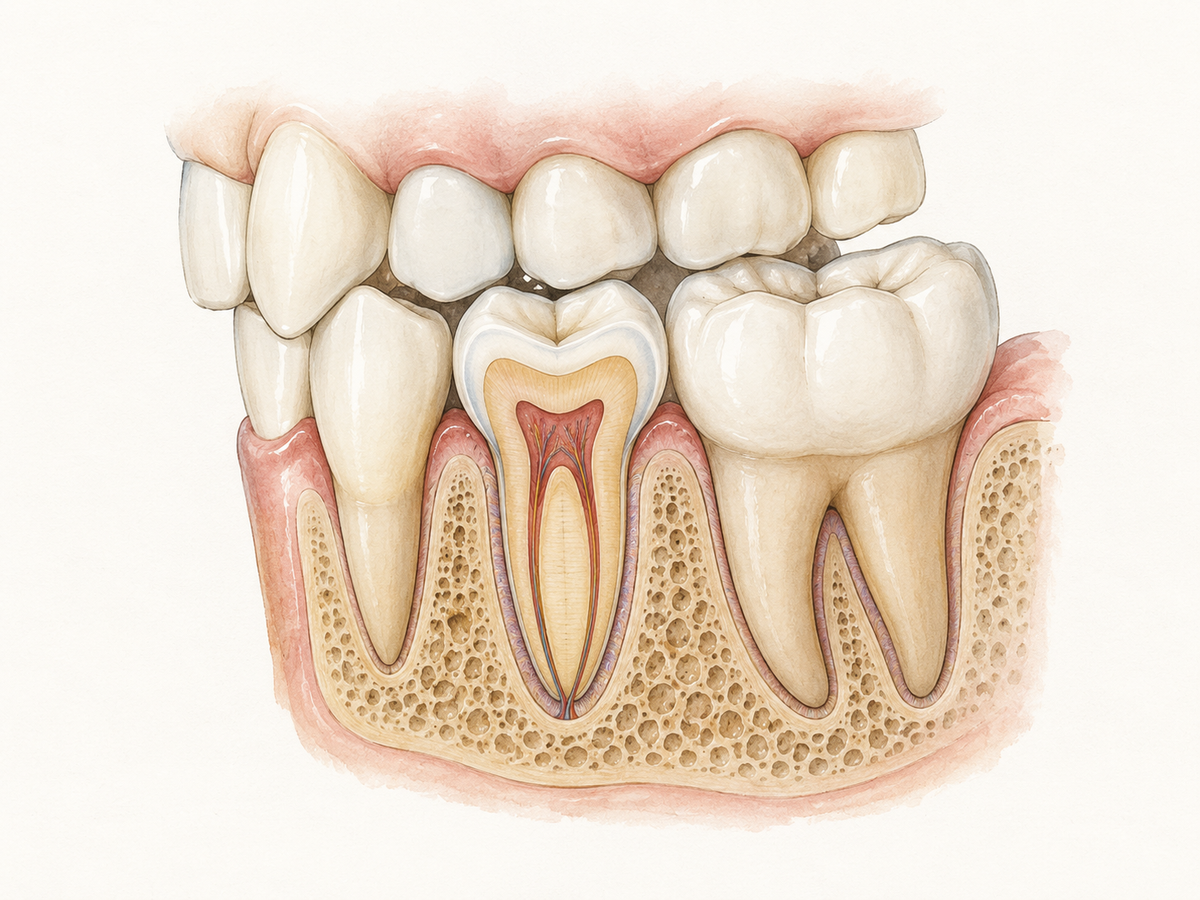




















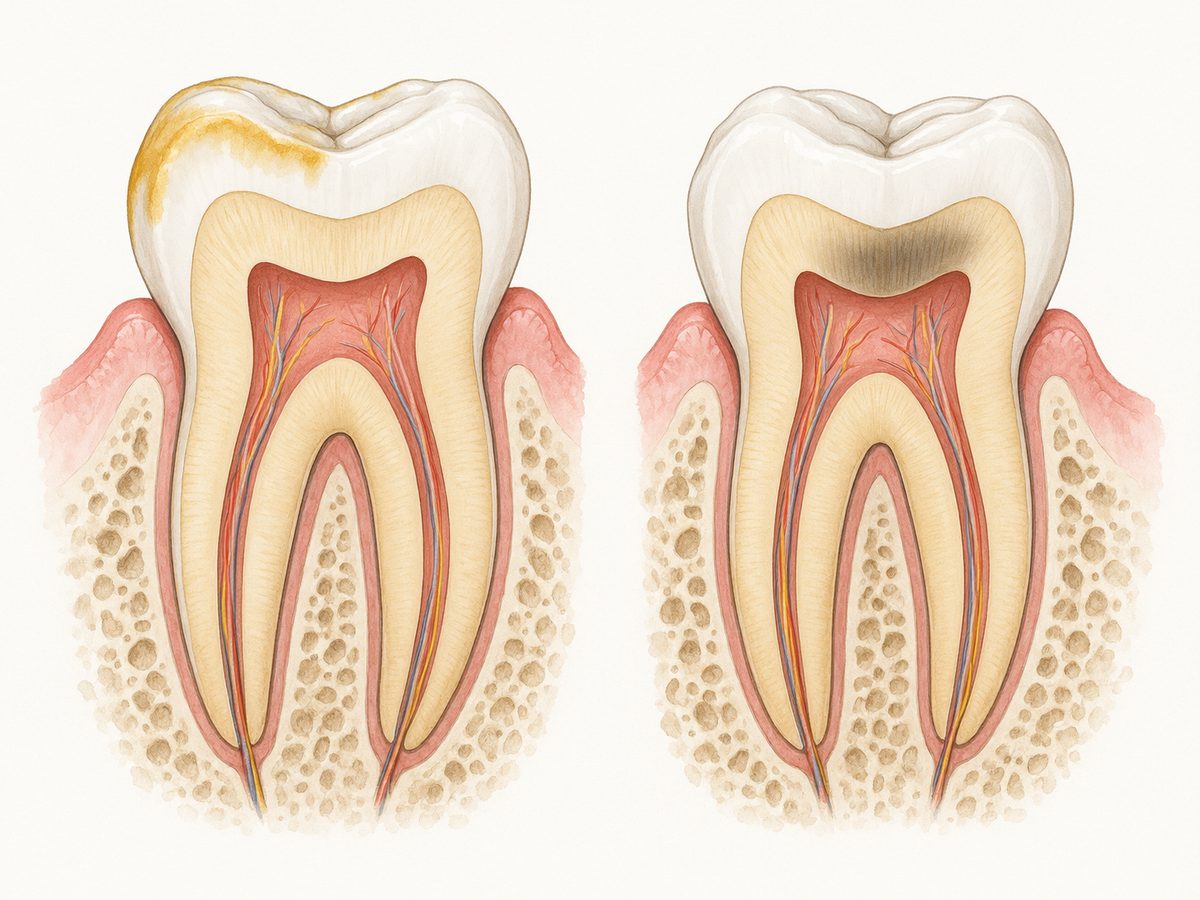
Tooth stains are not all the same. A surface stain sits on the outer enamel layer of the tooth, while a deep stain sits inside the softer dentin layer underneath. Surface stains from coffee, tea, wine, tobacco, and plaque often improve with professional cleanings, polishing, whitening toothpaste, or at-home whitening trays. Deep stains from antibiotics, fluoride, injury, or root canal treatment usually need professional bleaching, bonding, or veneers.
Don’t treat a deep stain like a surface stain. If the discoloration is gray, blue, brown, single-tooth, or still there after a good cleaning, get a dental evaluation before spending more on whitening.
Why Stain Type Changes Treatment
Tooth discoloration is usually grouped by where the color sits, not just how dark it looks. According to clinical guidance on tooth discoloration, stains are classified mainly as extrinsic or intrinsic. An extrinsic stain means the color is on the outside of the tooth, often within a thin, almost invisible film that forms on teeth. An intrinsic stain means the color is inside the tooth, within the dentin or enamel structure.
The layer matters because whitening products work where they can reach. A product aimed at surface film may not lighten a stain buried in the tooth. Choosing treatment based on the cause and depth can save money and reduce sensitivity. It also avoids the frustration of using the wrong product and seeing no change.
Extrinsic Stains: Surface-Level and Often Reversible
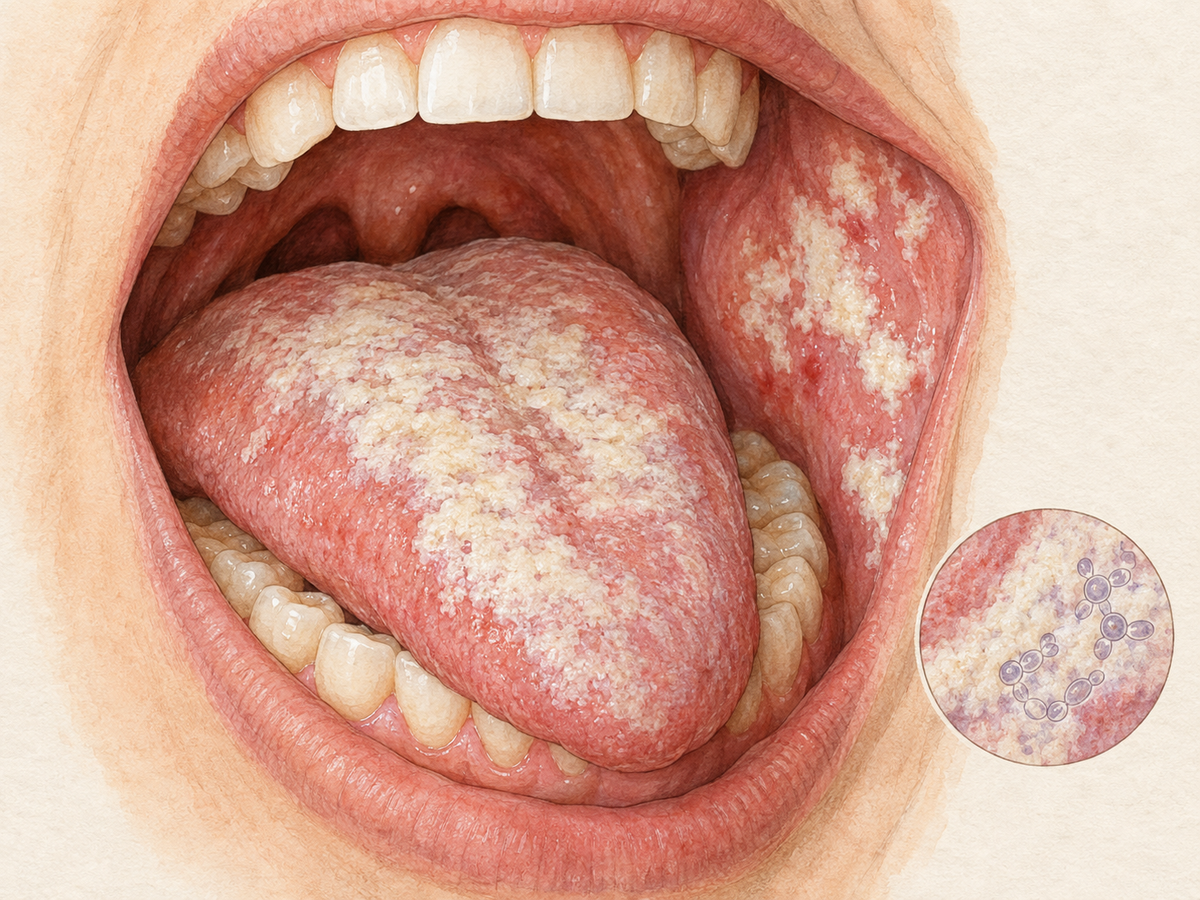
Extrinsic stains usually look like a yellow-to-brown film on the enamel. Common sources include coffee, tea, tobacco, and plaque buildup. Tannins in coffee and tea, tobacco tar, and hardened plaque can all leave surface color.
These stains often respond well when they are caught early. Professional cleaning and polishing with a paste and rotating rubber cup can remove many surface stains, according to the same review.
At-home options include:
- Whitening toothpaste, which may help polish away mild surface film but does not truly bleach the tooth.
- Whitening strips and dentist-supervised at-home trays, which can lighten mild extrinsic stains.
- Whitening rinses, which mostly help reduce new surface film.
Among over-the-counter products, whitening strips are the most likely to produce actual bleaching, but they still work best for mild surface staining, according to a review of over-the-counter whitening products. For many people, a professional cleaning is the fastest way to remove surface discoloration before it binds more strongly to the tooth.
Intrinsic Stains: Deep Discoloration That Needs In-Office Care
Intrinsic stains sit inside the dentin, the inner layer of the tooth. They may appear gray, blue, brown, or banded. Causes include tetracycline antibiotic staining, fluoride-related enamel changes called fluorosis, tooth injury, or a root canal-treated tooth that darkens over time overview of tooth discoloration causes. Unlike surface stains, these are harder to remove because the color is part of the tooth structure, according to a review of tooth discoloration.
Professional whitening is the usual first step. Dentist-applied bleaching can lighten many deep stains, including moderate to severe tetracycline discoloration, according to a review of tetracycline-stained teeth. For a root canal-treated tooth, internal bleaching places the whitening agent inside the tooth chamber. This is an effective option for non-vital teeth, according to a systematic review of internal bleaching.
If bleaching alone is not enough, tooth-colored bonding or veneer shells can cover the stain. Over-the-counter whitening rarely fixes intrinsic stains. Most over-the-counter products mainly address surface stains or help prevent new surface film from forming, as noted in the OTC whitening review. Using them repeatedly on a deep stain may cause sensitivity without visible results.
Combination & Age-Related Stains: When Both Layers Are Involved
Many people have both stain types. Years of surface stain can build up on enamel. At the same time, enamel slowly thins with age, allowing the yellow dentin underneath to show through. The result is a dull, yellowed appearance that is partly on the tooth and partly inside it. Tooth discoloration tends to worsen with age, according to a clinical review.
Treatment for combination stains is often staged. Professional whitening can lighten both surface and some inner color. Good daily hygiene helps prevent new surface film. If the enamel is thin or worn, bonding or veneers may be needed to restore the look and protect the tooth. Improvement is realistic, but it may take more than one step and won’t return teeth to a childhood shade.
Removal Options: At-Home vs Professional
Here is a simple comparison.
| Option | What it does | Best for |
|---|---|---|
| Whitening toothpaste | Polishes away mild surface film | Upkeep, mild surface stains |
| Whitening strips or trays | Peroxide-based lightening at home | Mild surface stains, some shallow discoloration |
| Whitening rinses | Help reduce new surface film | Prevention, not deep whitening |
| Dentist-applied bleaching | Stronger peroxide under supervision | Stubborn or deeper stains |
| Professional polishing or microabrasion | Physically removes surface discoloration | Tenacious surface stains |
| Bonding or veneers | Covers deep stains | Deep, single-tooth, or worn teeth |
Clinical trials have found that at-home and in-office whitening can both lighten teeth, with similar effectiveness in many cases randomized trial comparing at-home and in-office whitening. In-office treatment uses a higher concentration over fewer visits. At-home treatment uses a lower concentration over a longer period. The trade-off is mainly cost, convenience, speed, and supervision.
Which should you choose? If the stain is surface-level and spread across several teeth, start with home care or a cleaning. If the stain is deep, affects one tooth, or has not improved after careful home care, see a dentist first.
Mistakes That Make Stains Worse or Return
A few common habits can make tooth stains worse or cause new problems.
- Overusing whitening products. Using more gel or leaving it on longer than directed can lead to enamel changes and sensitivity study on excessive whitening.
- Brushing too hard. Aggressive brushing or very abrasive whitening toothpaste can wear the outer enamel and make teeth look more yellow as dentin shows through OTC whitening review.
- Ignoring cavities or gum disease. A dark spot may be decay, not a stain. Whitening over decay can hide the real problem and cause discomfort.
- Expecting permanent results without changing habits. Coffee, tea, wine, and tobacco will keep adding stain over time.
Tooth sensitivity is the most common side effect of peroxide whitening, according to a review of whitening-related sensitivity. You can reduce the chance of problems by following instructions, using products as directed, and asking a dentist before starting if you have receding gums, cavities, or sensitive teeth.
Prevention is part of stain removal. Rinsing with water after meals, avoiding tobacco, and keeping regular dental cleanings can slow stain return.
When to See a Dentist
See a dentist if you notice any of these:
- One tooth suddenly darkens, especially after an injury. This can be a sign of pulp damage inside the tooth, according to a meta-analysis on trauma and discoloration.
- A stain appears gray, blue, or brown and does not respond to surface cleaning.
- Staining is linked to a medication such as tetracycline.
- Gums are receding and exposing a darker root area.
- A stain does not improve after careful at-home care.
- The spot is rough, pitted, or catches food, which could be decay.
A dentist can check whether the discoloration is extrinsic, intrinsic, or a sign of tooth decay or another dental problem. A single discolored tooth is more likely to have an intrinsic cause than surface staining, according to the etiology review. The next step is to book a dental cleaning or cosmetic consultation and mention the stain.
This article has been reviewed by an oral health professional for accuracy. It is intended to provide general educational information and should not be used as a substitute for personalized medical advice, diagnosis, or treatment. If you have questions or concerns about your oral health, please consult a dentist, physician, or other qualified healthcare provider.